

Here’s the number that gets everyone’s attention: every unscheduled maintenance event costs airlines around $150,000 in direct expenses, delays, and passenger compensation. Multiply that by thousands of events annually, and you understand why airlines keep throwing money at AI prediction systems.
How Maintenance Strategy Has Evolved
Aircraft maintenance has gone through distinct evolutionary phases:
- Reactive maintenance — Fix it when it breaks. Obviously unacceptable when you’re talking about aircraft
- Preventive maintenance — Replace components on fixed schedules regardless of actual condition. Safe but wasteful
- Condition-based maintenance — Monitor components and maintain when indicators suggest need. Getting warmer
- Predictive maintenance — Use AI to forecast when components will need attention. The current frontier
Most airlines are somewhere between preventive and predictive, using machine learning to optimize when things get fixed.
What Predictive Maintenance Actually Looks Like
AI predictive maintenance systems analyze multiple data streams to forecast component health. Here’s where the data comes from:
- ACARS messages — Real-time data transmitted during flight
- Flight data recorders — Detailed parameter recordings from every flight
- Engine monitoring systems — Temperature, pressure, and vibration trends
- Maintenance records — Historical repairs and component changes going back years
- Environmental data — Routes flown, weather exposure, operating conditions
The Machine Learning Models Behind It
Several AI approaches power these predictions:
- Anomaly detection — Identifying parameters deviating from normal patterns
- Survival analysis — Modeling time-to-failure for specific components
- Classification models — Predicting which failure mode might occur
- Deep learning — Finding patterns in complex, high-dimensional sensor data that humans would never spot
Where This Actually Works Today
Engine Health Monitoring
Jet engines generate terabytes of data per flight. AI systems analyze this flood of information to predict:
- Exhaust Gas Temperature margin erosion
- Oil consumption trends indicating bearing wear
- Vibration patterns suggesting rotor imbalance
- Compressor efficiency degradation
Delta and United report 30-40% reductions in unscheduled engine removals using AI prediction.
APU Monitoring
APUs—the small engines that provide power on the ground—fail frequently and expensively. Predictive systems now achieve 85%+ accuracy predicting APU failures days in advance. Days. That’s enough time to schedule the replacement at a convenient station instead of scrambling when it fails at some outstation at 2 AM.
Landing Gear and Brakes
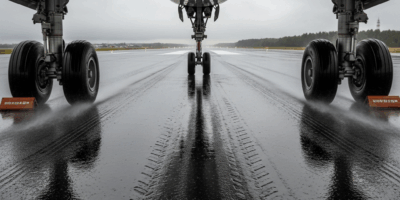
AI analyzes brake temperature profiles, hydraulic pressure trends, and tire wear patterns to optimize maintenance timing. The payoff: extended component life while maintaining safety margins.
Avionics and Electrical Systems
Intermittent faults in electrical systems are notoriously difficult to diagnose. Every maintenance technician has stories about gremlins that disappear whenever you look for them. AI pattern recognition identifies precursor signatures that predict failures before they become apparent.
The System Architecture
Modern predictive maintenance platforms include several components:
- Data lake — Centralized storage for all maintenance-relevant data
- Streaming analytics — Real-time processing of in-flight data
- Model training pipeline — Continuous improvement of prediction algorithms
- Alerting system — Notifications to maintenance planners and controllers
- Integration layer — Connections to maintenance planning and inventory systems
The Business Case
Airlines implementing AI predictive maintenance report substantial returns:
- 35-45% reduction in unscheduled maintenance events
- 20-30% decrease in component inventory costs
- 10-15% improvement in aircraft availability
- Millions saved in delay costs and passenger compensation
- Extended component life — Parts used closer to their actual limits instead of conservative calendar-based replacement
Where Projects Go Wrong
Despite clear benefits, many predictive maintenance projects struggle:
Data Quality Disasters
Legacy systems weren’t designed for AI. Data may be incomplete, inconsistent, or trapped in proprietary formats from vendors who went out of business a decade ago. Cleaning and normalizing this mess often consumes most of the project timeline.
The Failure Data Problem
Modern aircraft are remarkably reliable—which creates a paradox. Few actual failures means little training data for the AI models. Some airlines pool data through consortiums to build larger training sets, but competitive concerns make this harder than it sounds.
The Human Factor
Maintenance technicians may distrust AI recommendations, especially when they contradict decades of experience. “The computer says replace this part that looks fine to me” is a hard sell. Building trust requires transparency about how predictions are made.
Regulatory Reality
Approved maintenance programs have regulatory standing. Airlines can’t simply change inspection intervals because an AI said so. Getting regulatory approval for AI-driven maintenance changes is slow, expensive, and uncertain.
The Vendor Landscape
Multiple vendors offer predictive maintenance solutions:
- OEM solutions — Boeing AnalytX, Airbus Skywise, GE Predix
- Specialized providers — FLYHT, Avionica, Lufthansa Technik
- Platform vendors — Palantir, C3.ai, Uptake
- Custom development — Airlines building proprietary systems
Each approach has tradeoffs between capability, cost, and control.
Digital Twins Enter the Picture
Digital twins—virtual replicas of physical aircraft—enhance predictive maintenance:
- Simulation — Testing “what if” scenarios without real-world risk
- Training data generation — Creating synthetic failure data for AI training
- Root cause analysis — Understanding how components interact and fail
- Life tracking — Monitoring cumulative stress on individual aircraft
Getting Started
Airlines beginning their predictive maintenance journey should:
- Start with data — Assess what data actually exists and its quality
- Choose high-value targets — Focus on components with frequent failures and high costs first
- Build proof of concept — Demonstrate value before scaling
- Develop internal capability — Don’t rely entirely on vendors who may disappear or raise prices
- Engage regulators early — Understand approval pathways before you need them
- Plan organizational change — Prepare maintenance teams for new workflows
Where This Is Heading
As AI capabilities advance, predictive maintenance will become more sophisticated:
- Prescriptive maintenance — AI recommending optimal repair actions, not just timing
- Autonomous inspection — Robots conducting inspections triggered by predictions
- Fleet-wide optimization — Coordinating maintenance across entire fleets
- Supply chain integration — Automatic parts ordering based on predictions
The Bottom Line
AI-powered predictive maintenance represents one of aviation’s most mature and valuable AI applications. When done right, these systems predict failures before they happen—reducing costs, improving safety, and keeping aircraft flying. Airlines that master predictive maintenance gain significant competitive advantage in an industry where every minute of aircraft availability matters.
The technology works. The challenge is implementation.



Stay in the loop
Get the latest aviate ai updates delivered to your inbox.