
As someone who’s followed ATC modernization through multiple false starts, I learned everything there is to know about what’s actually working in control towers. Today, I will share it all with you.
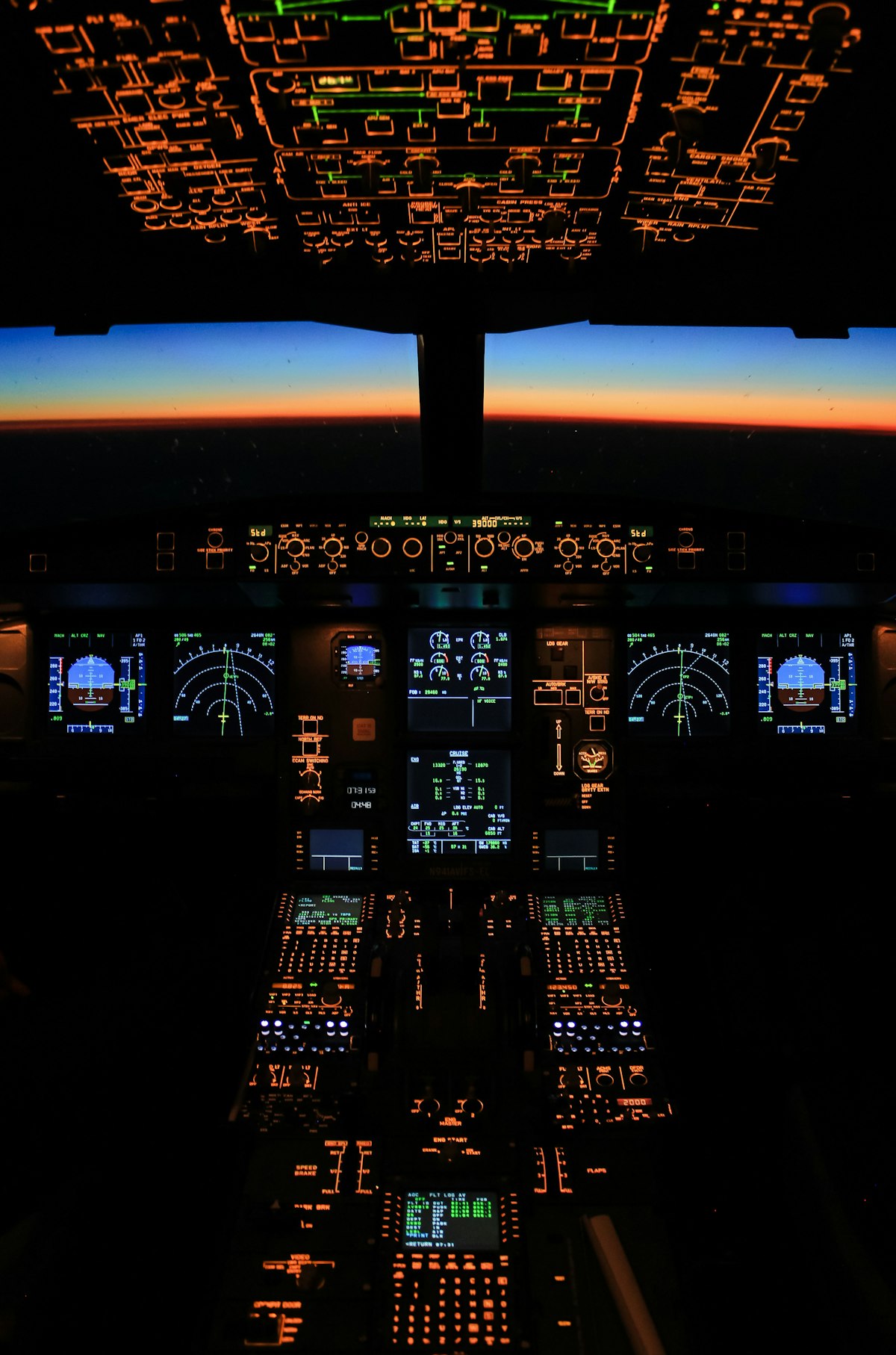
Air traffic control is one of aviation’s most demanding professions. Controllers manage dozens of aircraft simultaneously while maintaining razor-thin safety margins. Now artificial intelligence is entering the control tower—not to replace human controllers, but to give them capabilities beyond what any human could achieve alone.
Where Human Controllers Hit Their Limits
Human controllers are remarkably capable. But they face inherent limitations:
- Cognitive load — Maximum safe traffic depends on controller workload
- Consistency — Performance varies with fatigue, stress, and experience
- Information processing — Limited ability to integrate multiple data sources simultaneously
- Prediction — Difficult to anticipate conflicts more than a few minutes ahead
- Optimization — Impossible to calculate truly optimal solutions in real-time
AI addresses these limitations by extending human capability rather than replacing it.
What’s Actually Running in ATC Today
Arrival Managers (AMAN)
AI-powered arrival managers sequence aircraft approaching busy airports. These systems:
- Calculate optimal approach sequences considering aircraft type, speed, and fuel
- Assign delay to aircraft still en route, smoothing arrival flows
- Predict landing times with high accuracy
- Adjust sequences automatically as conditions change
Departure Managers (DMAN)
Similar AI systems optimize departures:
- Sequence departures based on routing, weight, and performance
- Coordinate with arrival traffic for runway efficiency
- Calculate optimal takeoff times to avoid en route congestion
- Manage ground delays to balance runway and taxiway utilization
Conflict Detection and Resolution
AI systems monitor all traffic, predicting conflicts far earlier than human controllers:
- Medium-term conflict detection: 10-30 minutes ahead
- Suggested resolutions minimizing delay and fuel burn
- Coordination across sector boundaries
- Weather integration for conflict-free routes
The NATS Experience
NATS (National Air Traffic Services) at Heathrow has been a pioneer in AI ATC. Their results include:
- Intelligent approach sequencing — 15% improvement in arrival efficiency
- Predictive conflict alerting — Earlier warnings allow gentler corrections
- Weather impact modeling — Proactive capacity adjustments before weather arrives
- Controller workload balancing — AI distributes traffic to equalize effort
Machine Learning for Traffic Flow
AI learns patterns in air traffic that humans might not recognize:
Demand Prediction
Neural networks predict traffic demand hours in advance based on:
- Historical patterns by day, season, and event
- Airline schedules and on-time performance
- Weather forecasts affecting departure and arrival rates
- Special events creating unusual demand
Delay Propagation
AI models how delays spread through the system, enabling interventions that prevent cascading problems. A small delay managed early may prevent hours of system-wide chaos later.
Voice Communications Get Smarter
Voice remains the primary interface between controllers and pilots. AI is transforming this communication:
Speech Recognition
Systems now transcribe controller-pilot communications in real-time with high accuracy, even with varied accents and radio interference.
Intent Understanding
AI extracts meaning from communications—understanding that “maintain two five zero” is an altitude instruction and verifying it matches the flight’s clearance.
Readback Verification
Automatic detection of readback errors—when pilots repeat different instructions than controllers issued. This catches a major source of aviation incidents before they become problems.
Automatic Logging
Complete communication records generated automatically, supporting safety analysis and training.
Decision Support in Action
AI provides controllers with decision support for complex situations:
- What-if analysis — Rapidly evaluating consequences of potential instructions
- Optimal solutions — Suggested clearances that minimize delays
- Risk assessment — Flagging situations with elevated risk
- Workload prediction — Warning of upcoming busy periods
Safety Improvements
AI enhances ATC safety through multiple mechanisms:
- Earlier conflict detection — More time for smooth resolution
- Reduced workload — Fewer errors from overloaded controllers
- Consistent performance — AI doesn’t have bad days
- Pattern recognition — Identifying developing problems before they become critical
- Training support — AI identifying controller actions for training review
Capacity Without New Runways
AI-enhanced ATC increases airspace capacity without new infrastructure:
- Tighter spacing — Precise trajectory prediction enables reduced separation
- Smoother flows — Optimized sequences reduce delays
- Better weather response — Faster adaptation to changing conditions
- Reduced controller burden — More traffic per controller safely managed
The Hard Problems
Deploying AI in ATC faces significant hurdles:
Trust Building
Controllers must trust AI recommendations. This requires transparency about how suggestions are generated and track records demonstrating reliability. You can’t just tell a controller to trust the black box.
Certification Challenges
Aviation regulators require extensive safety demonstration. AI systems must be validated across all possible conditions—a challenging requirement for machine learning that’s learned from historical data.
Integration Nightmares
Legacy ATC systems weren’t designed for AI integration. Connecting modern AI to decades-old displays and interfaces requires careful engineering and often painful compromise.
International Coordination
Airspace crosses borders. AI systems must interoperate across different national implementations.
The Automation Roadmap
ATC automation is proceeding in phases:
- Advisory — AI provides suggestions that humans evaluate and implement
- Automated routine tasks — AI handles standard situations with human monitoring
- Human-on-the-loop — AI acts autonomously with humans overseeing
- Full automation — AI manages routine operations; humans handle exceptions
Most current implementations are at phase 1 or 2. Full automation remains decades away, if it ever arrives.
Remote and Digital Towers
AI enables digital tower operations where controllers work remotely using camera feeds and AI processing:
- Multiple airports controlled from single locations
- AI enhancing camera views with overlay information
- Automated detection of runway incursions
- Night vision and weather penetration capabilities
Global Programs
Major ATC AI initiatives are underway worldwide:
- FAA NextGen — Modernizing American airspace with AI components
- SESAR (Europe) — Single European Sky ATM Research program
- CARATS (Japan) — Collaborative Actions for Renovation of Air Traffic Systems
- CAAS (Singapore) — Advanced AI for Changi airspace
The Bottom Line
AI in air traffic control is not about replacing the skilled professionals who keep our skies safe. It’s about giving them tools that extend their capabilities beyond human limits. Earlier conflict detection, optimal sequencing, automated communication logging, and predictive traffic flow management—these AI capabilities make controllers more effective and the skies safer.
As aviation traffic continues to grow, AI-enhanced ATC will be essential to maintaining safety while increasing capacity. The technology is ready. The challenge is implementation.



Stay in the loop
Get the latest aviate ai updates delivered to your inbox.