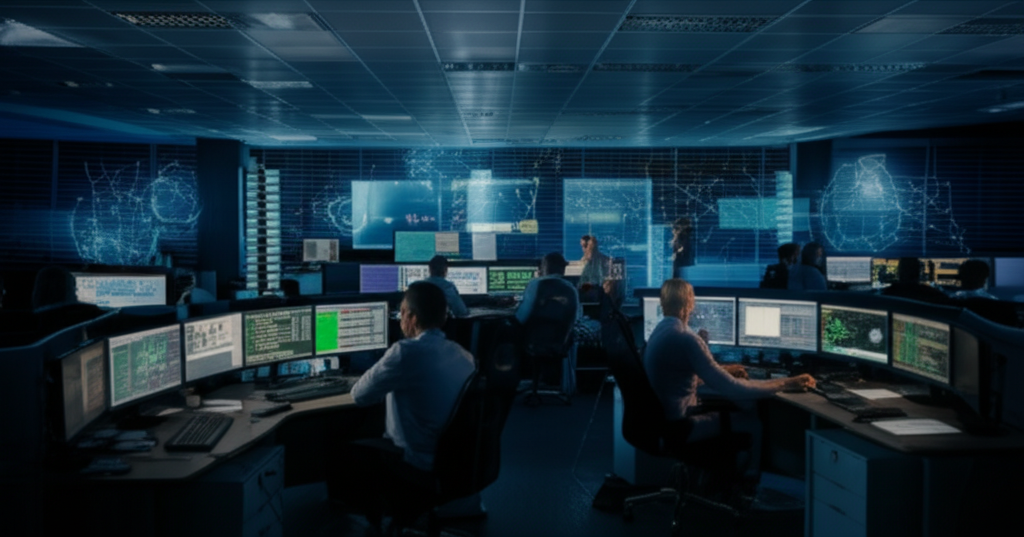
As someone who has tracked these incidents closely since the first major airline hacks, I learned everything there is to know about how hackers target airports and why airlines struggle to keep up. Today, I will share it all with you.
The Scale of Aviation Cyber Threats in 2025
Here’s what caught my attention when I started digging into the actual numbers. EASA documented a 600% spike in aviation cyberattacks between 2024 and 2025. That’s not a typo. We’re talking roughly 1,000 attacks hitting airports worldwide every single month.
The breakdown looks something like this: DDoS attacks make up about a quarter of all incidents targeting airlines and airports. But the scarier statistic? Seventy-one percent of attacks involve stolen credentials and unauthorized access. Ransomware gangs specifically—security researchers counted 27 significant attacks from 22 different groups between January 2024 and April 2025.
Major Cyber Attacks on Airlines and Airports
March 2025 was particularly rough. LAX got hammered by a DDoS attack from Dark Storm Team. They flooded the systems with junk traffic until flight information displays went dark, baggage handling stalled, and electronic check-in died across the terminal. Passengers stood around wondering if their flights still existed.
Kuala Lumpur International Airport had it worse. Hackers demanded $10 million in ransom after breaching critical systems. The attack triggered Malaysia’s entire national cybersecurity response. Meanwhile in Italy, Noname057(16)—a pro-Russia hacktivist group—took down airport websites as part of their ongoing campaign against EU infrastructure.
Airlines haven’t escaped either. Qantas admitted 5.7 million customers had their personal data compromised through a third-party platform breach. Air France and KLM lost customer data when attackers broke into their customer service systems. Hawaiian Airlines dealt with IT infrastructure disruptions through late June 2025.
Who Is Behind These Attacks?
Two main categories of attackers, and they operate differently. The financially motivated criminals want money—ransoms, stolen data they can sell, access they can monetize. The FBI traced several big aviation breaches to Scattered Spider, the same group that hit Las Vegas casinos in 2023. These people are professionals running what amounts to a criminal enterprise.
Then you’ve got the hacktivists. Groups like Z-PENTEST Alliance, Noname057(16), and Dark Storm Team claim attacks for political reasons. They’re hitting Western aviation targets to make statements rather than profits. That makes them unpredictable in ways that ransomware gangs aren’t.
How Airlines Are Fighting Back
The money flowing into aviation cybersecurity tells you how seriously the industry takes this now. The market is projected to nearly double from $4.6 billion in 2023 to $8.42 billion by 2033. That’s not pocket change even by airline standards.
DDoS mitigation has become table stakes. Airports are deploying systems that spot and filter malicious traffic before it overwhelms everything. Security operations centers monitoring network activity 24/7 have become standard at major hubs.
What’s actually encouraging: airlines and airports are finally sharing information with each other. IATA is building shared cyber risk frameworks. Aviation authorities across different countries are swapping threat intelligence. The Technology Advancement Center is pushing for collective action rather than everyone defending themselves in isolation.
New Regulations Coming in 2026
The EU’s Implementing Regulation 2023/203 kicks in next year, and it’s going to force changes. Every airline, airport, and aviation service provider operating in European airspace will need to meet comprehensive cybersecurity requirements. Risk assessments, incident reporting, documented security frameworks—all mandatory.
Non-compliance means penalties and potentially losing the ability to operate in European airspace. That’s the kind of consequence that actually gets boardroom attention.
The Future of Aviation Cybersecurity
The threat landscape keeps shifting. Ransomware and data extortion campaigns are getting more aggressive. AI is making phishing attacks more convincing—we’re already seeing deepfake voice and video attempts designed to manipulate airline personnel.
The math on disruption costs is brutal. One hour of downtime at a major airport during peak operations burns through roughly a million dollars. Some airlines have canceled over 1,200 flights from single cyberattack incidents. As aviation goes more digital, the damage potential only grows.
Cybersecurity isn’t optional anymore for anyone in aviation. The industry has to keep investing in defenses, training people, and sharing intelligence faster than attackers can adapt. What happens in these digital battles over the next few years will determine whether flying stays as reliable as we’ve come to expect.


Stay in the loop
Get the latest aviate ai updates delivered to your inbox.