
**Exploring the Wonders of Our Vast Universe**

Space: Why I Can’t Stop Thinking About It

I remember being maybe nine years old, lying in the backyard with my dad, staring up at the sky. He pointed out Orion’s Belt and told me that the light from those stars had been traveling for hundreds of years just to reach my eyeballs. Something about that completely rewired my brain. I’ve been hooked on space ever since. And honestly, the more I learn, the more I realize how little we actually know. Space is enormous in a way that’s genuinely hard to wrap your head around — and that’s kind of the point.
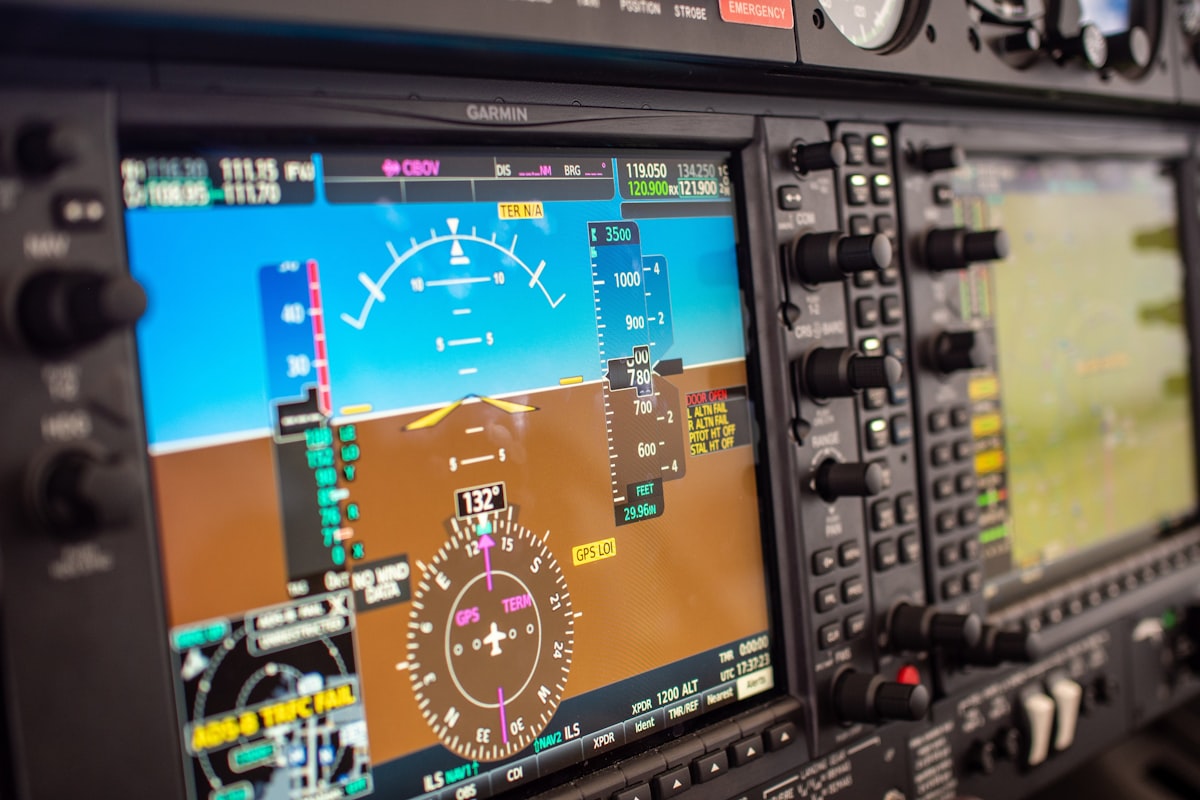

Aviation technology

The Stuff That’s Out There

Space has gotten complicated with all the new discoveries and missions flying around. So let me try to break down the main categories of what we’re looking at up there.

  • Planets: Large celestial bodies orbiting stars. We’ve got eight in our own solar system — Mercury, Venus, Earth, Mars, Jupiter, Saturn, Uranus, and Neptune. But there are thousands of confirmed exoplanets orbiting other stars, too. The variety is wild.
  • Stars: Massive balls of hydrogen and helium undergoing nuclear fusion. Our Sun is one, and it’s honestly pretty average as stars go. Some are thousands of times larger. Let that sink in.
  • Galaxies: Huge systems of stars, gas, dust, and dark matter. The Milky Way — our home galaxy — contains billions of stars. Billions. And there are billions of galaxies. The scale is almost absurd.
  • Black Holes: Regions where gravity is so intense that nothing escapes, not even light. They form when massive stars collapse. I find them terrifying and fascinating in equal measure.
  • Moons: Natural satellites orbiting planets. Earth has one (you’ve probably noticed it), but Jupiter has at least 95. Some of those moons might even harbor conditions for life.

Our Solar System

Probably should have led with this since it’s the neighborhood we actually live in. Our solar system sits within the Milky Way, and everything in it is bound to the Sun by gravity.

  • The Sun: A nearly perfect sphere of hot plasma. It drives our climate, our weather, and, you know, all life on Earth. No big deal.
  • Inner Planets: Mercury, Venus, Earth, and Mars. These are the rocky, terrestrial planets made mostly of rock and metal. Earth is the only one we know supports life — for now.
  • Outer Planets: Jupiter, Saturn, Uranus, and Neptune. The gas giants. They’re enormous compared to the inner planets and are mainly hydrogen and helium. Saturn’s rings alone would stretch almost the distance from Earth to the Moon.
  • Asteroids: Small rocky objects, mostly hanging out in the asteroid belt between Mars and Jupiter. Some of them are worth monitoring because their orbits occasionally bring them uncomfortably close to Earth.
  • Comets: Icy bodies that release gas and dust as they get close to the Sun, creating those beautiful tails you sometimes see in the night sky. They’re essentially dirty snowballs on very long trips.

How We’ve Explored Space

Humans have been looking up and wondering for thousands of years, but we’ve only been actually going up there for about seventy.

  • The Early Days: Sputnik 1 launched in 1957 — first artificial satellite. Yuri Gagarin became the first human in space in 1961. Then Apollo 11 in 1969, and Neil Armstrong and Buzz Aldrin walked on the Moon. I still get chills thinking about that.
  • Spacecraft That Keep Going: Voyagers 1 and 2, launched in 1977, are still sending data back. Still. After nearly fifty years. The Hubble Space Telescope has given us incredible images since 1990. And the International Space Station has been continuously occupied since 2000 — a floating lab where international crews do research in microgravity.
  • Mars Missions: We’ve sent a lot of hardware to Mars. The Curiosity and Perseverance rovers are analyzing soil and rocks, looking for signs of past or present life. Every time one of those rovers finds something interesting, I end up falling down a two-hour reading rabbit hole.
  • Private Space Companies: SpaceX, Blue Origin, and others are changing the game. They’re making space travel cheaper and more accessible. Or at least, that’s the goal. SpaceX’s reusable rockets were a genuine turning point — I remember watching the first Falcon 9 booster land on a drone ship and thinking, “Wait, that actually worked?”

The Science Behind It All

A few key concepts that help make sense of everything:

  • Gravity: The force that keeps planets orbiting stars, moons orbiting planets, and you stuck to your chair. It’s deceptively simple as a concept but incredibly complex in its effects at cosmic scales.
  • Light-Year: Not a unit of time — a unit of distance. It’s how far light travels in one year, which works out to roughly 9.46 trillion kilometers. When someone says a star is “four light-years away,” that means the light you’re seeing left that star four years ago.
  • The Big Bang: The prevailing theory is that the universe began as an incredibly hot, dense point about 13.8 billion years ago and has been expanding ever since. It’s hard to imagine, but the evidence for it is strong.
  • Dark Matter and Dark Energy: These are — and I’m being honest here — things we mostly don’t understand. Dark matter has gravitational effects but doesn’t interact with light. Dark energy seems to be driving the universe’s expansion to accelerate. Together they make up about 95% of the universe. We can only directly observe about 5%. That’s humbling.

Where We’re Headed Next

The future of space exploration is looking more ambitious than ever:

  • Mars Colonization: SpaceX has been working toward putting humans on Mars. The idea of establishing a permanent, self-sustaining presence there is no longer pure science fiction. It’s an engineering problem now. A very hard one, but still.
  • Back to the Moon: NASA’s Artemis program aims to return humans to the lunar surface. The long game is building a base there — a jumping-off point for deeper space missions. I’m cautiously optimistic about this one.
  • Asteroid Mining: Some companies believe mining asteroids for precious metals could become economically viable. It sounds like science fiction, but the math actually works out in some scenarios.
  • Interstellar Travel: Projects like Breakthrough Starshot want to send tiny spacecraft to nearby stars. We’re a long way from actual interstellar travel, but these initiatives push the boundaries of what’s possible and spark real innovation.

Why Space Exploration Matters Down Here

That’s what makes space exploration endearing to people who aren’t just space nerds — it actually improves life on Earth.

  • Satellite Technology: Communication, weather forecasting, GPS navigation — all satellite-dependent. Your phone’s map app works because of a network of satellites overhead.
  • Medical Technology: MRI and CT scanning technologies have roots in techniques originally developed for space missions. The crossover between space tech and medicine is surprisingly deep.
  • Environmental Monitoring: Satellites track climate change, natural disasters, and deforestation. They’re some of our best tools for understanding what’s happening to our planet.
  • Inspiring the Next Generation: Space missions capture public imagination like almost nothing else. Every major mission inspires kids to pursue science, engineering, and math. That pipeline of future scientists matters enormously.

I could talk about this stuff all day. And honestly, every year brings new discoveries that make the universe feel even bigger and stranger than I thought. If you’re not paying attention to space right now, you’re missing out on one of the most exciting eras of exploration in human history.

Emily Carter

Emily Carter

Author & Expert

Emily reports on commercial aviation, airline technology, and passenger experience innovations. She tracks developments in cabin systems, inflight connectivity, and sustainable aviation initiatives across major carriers worldwide.

421 Articles
View All Posts