
Radar Technology: A Deep Dive from Someone Who’s Spent Too Much Time Reading About It
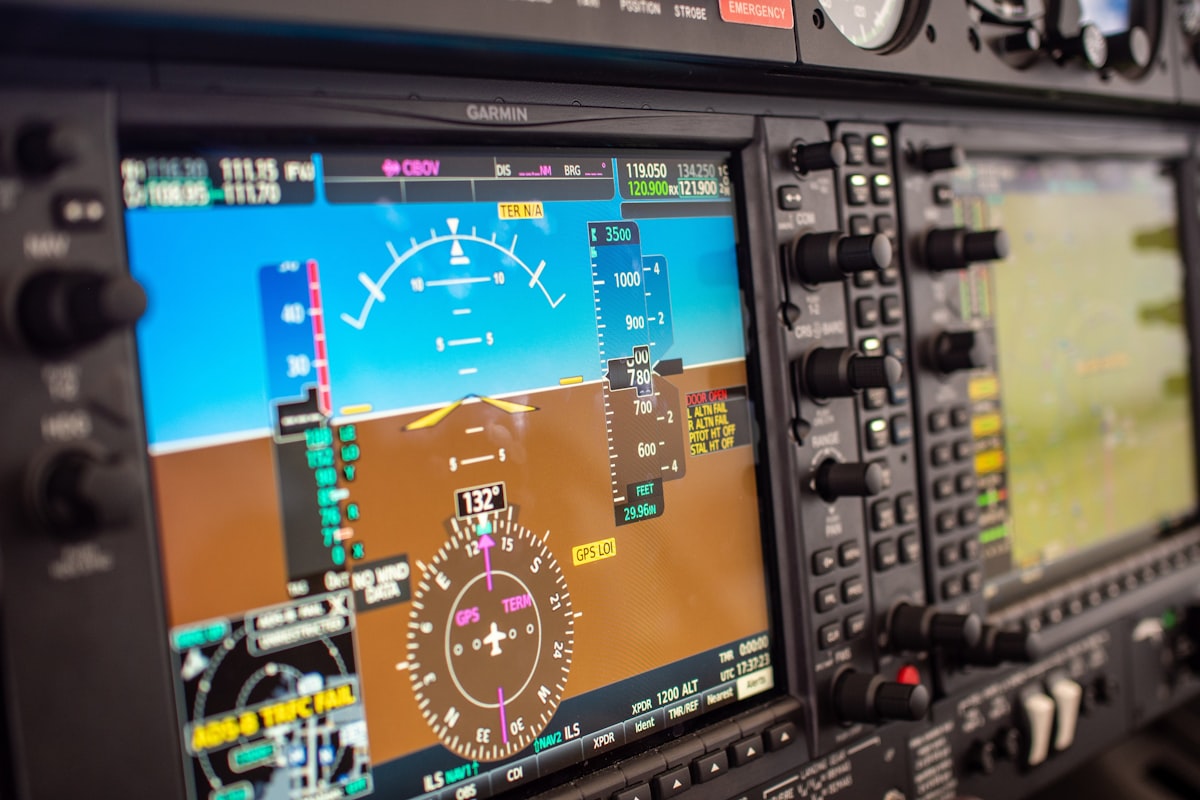
I got curious about radar a few years back after a pilot friend explained how his weather radar literally saved the flight one stormy evening over the Gulf. He described this green and red display showing exactly where the heavy precipitation was, and how he just… flew around it. That conversation sent me down a rabbit hole, and now I know way more about radar than any non-engineer probably should.
What Radar Actually Is
Radar stands for Radio Detection and Ranging. The basic concept is straightforward: send out radio waves, wait for them to bounce off something, and analyze what comes back. From those reflected signals you can figure out where an object is, how far away it is, how fast it’s moving, and sometimes even what it’s shaped like.
Every time you check the weather forecast, drive past a speed trap, or fly on a commercial plane, radar is involved. It’s quietly running in the background of modern life.
A Quick History
Radar technology came into its own during World War II. The early systems were relatively simple — they could tell you something was out there and roughly how far away it was, but that was about it. Military necessity drove rapid development, though. By the end of the war, radar could track targets, identify aircraft types, and even observe weather patterns.
Since then it’s evolved dramatically. Modern radar systems would be unrecognizable to those WWII operators, but the fundamental principle — bouncing radio waves off things — hasn’t changed.
How It Works (Without the Physics Textbook)
A radar system has four main parts working together:
- Transmitter: Generates the radio waves. This is where the signal starts.
- Antenna: Sends the waves out toward the target area and then catches the reflections when they bounce back. It does double duty.
- Receiver: Picks up those faint returning signals. The reflected waves are much weaker than what was sent out, so the receiver has to be sensitive.
- Processor: Takes the raw signal data and turns it into something useful — a blip on a screen, a speed reading, a weather map.
The time delay between sending and receiving tells you distance. Changes in frequency tell you speed. The angle of the antenna tells you direction. Put it all together and you’ve got a pretty complete picture of what’s around you.
Types of Radar Systems
Pulsed Radar
This is the classic type. It sends out short bursts of radio energy, then listens for the return. Pulse, listen, pulse, listen. It builds up a picture over many cycles. Great for long-range detection, which is why aviation and maritime navigation rely on it heavily.
Continuous Wave Radar
Instead of pulses, this type sends a constant signal. It measures the Doppler effect — the shift in frequency when something is moving toward or away from the radar. Speed guns use this principle. So do some weather radar systems. It’s excellent at measuring velocity but less great at determining exact range.
Imaging Radar
Synthetic Aperture Radar, or SAR, is the standout here. It uses the motion of the radar platform — usually an aircraft or satellite — to simulate a much larger antenna than it actually has. The result is high-resolution images from above. Earth observation satellites use SAR to map terrain, monitor ice coverage, track deforestation. The images it produces are genuinely impressive.
Doppler Radar
This is the one most people have actually heard of, thanks to weather forecasts. Doppler radar detects not just where precipitation is, but how it’s moving. It can identify rotation in storm systems, which is how meteorologists spot developing tornadoes.
Where Radar Gets Used
Aviation
Air traffic control depends on radar to track aircraft and maintain safe separation. Pilots use onboard weather radar to navigate around storms. Approach radar guides planes in for landing. It’s hard to overstate how much aviation relies on this technology — or actually, let me just say it: modern commercial aviation wouldn’t function without radar.
Marine Navigation
Ships use radar for the same basic reasons planes do — figuring out what’s around them and avoiding collisions. In fog, at night, in heavy rain, radar is often the only way a ship captain can “see” what’s ahead. It picks up other vessels, coastlines, buoys, and obstacles.
Weather Forecasting
Weather radar networks monitor precipitation and storm activity in real time. The data feeds into forecast models and early warning systems. Next time you check your weather app and see that rain animation moving across the map, that’s radar data you’re looking at.
Law Enforcement
Radar speed guns are probably the most personally experienced radar technology for most drivers. They use Doppler principles to measure vehicle speed. Simple, effective, and the reason many of us are a little more careful about our speed on highways.
Space Exploration
Radar works in space too. NASA’s Magellan mission used radar to map the surface of Venus through its thick cloud cover — something optical cameras simply can’t do. Radar has also been used to study asteroids, map the Moon, and explore Mars.
Recent Advances
Radar technology hasn’t stood still. A few developments that matter:
Digital Signal Processing
DSP has been a game-changer. Digital processing allows real-time analysis of radar returns with much better resolution and accuracy than older analog systems. It filters out noise, sharpens images, and extracts more information from the same raw signals.
Phased Array Antennas
These can steer the radar beam electronically — no moving parts required. That means incredibly fast scanning and the ability to track multiple targets simultaneously. Military radar systems and advanced air traffic control facilities use phased arrays extensively.
Machine Learning Integration
Feeding radar data into AI systems opens up interesting possibilities. Pattern recognition, predictive tracking, anomaly detection. Autonomous vehicles use radar plus machine learning to understand their surroundings. It’s still early days for some of these applications, but the direction is clear.
Challenges That Remain
Radar isn’t perfect. Weather, terrain, and electromagnetic interference can all degrade performance. And as more devices use radio frequencies — think 5G, Wi-Fi, IoT sensors — spectrum congestion is becoming a real concern. There’s only so much electromagnetic spectrum to go around.
Miniaturization
Radar systems keep getting smaller. You can now put radar on drones, in cars, even in handheld devices. This opens up applications that would have seemed ridiculous twenty years ago.
Quantum Radar
This is still mostly in the lab, but quantum radar uses principles of quantum entanglement to potentially achieve better detection in cluttered environments. Whether it becomes practical remains to be seen, but it’s a fascinating area of research.
Sensor Fusion
The future isn’t radar alone — it’s radar combined with LiDAR, cameras, GPS, and other sensors. Autonomous vehicles already do this. The combined picture is much more complete than any single sensor provides.
Environmental Monitoring
Radar is increasingly used to track environmental changes — retreating glaciers, shifting coastlines, forest loss. These applications matter more every year as we try to understand and respond to climate change.
Radar has been around for decades, but it’s still evolving and finding new uses. From keeping planes safe to tracking tornadoes to enabling self-driving cars, it’s one of those foundational technologies that just keeps proving its worth. I’m glad my pilot friend told me that storm story — it opened my eyes to a technology I’d been taking for granted.




Stay in the loop
Get the latest aviate ai updates delivered to your inbox.