“`html
How Altitude Alerters Work During Descent
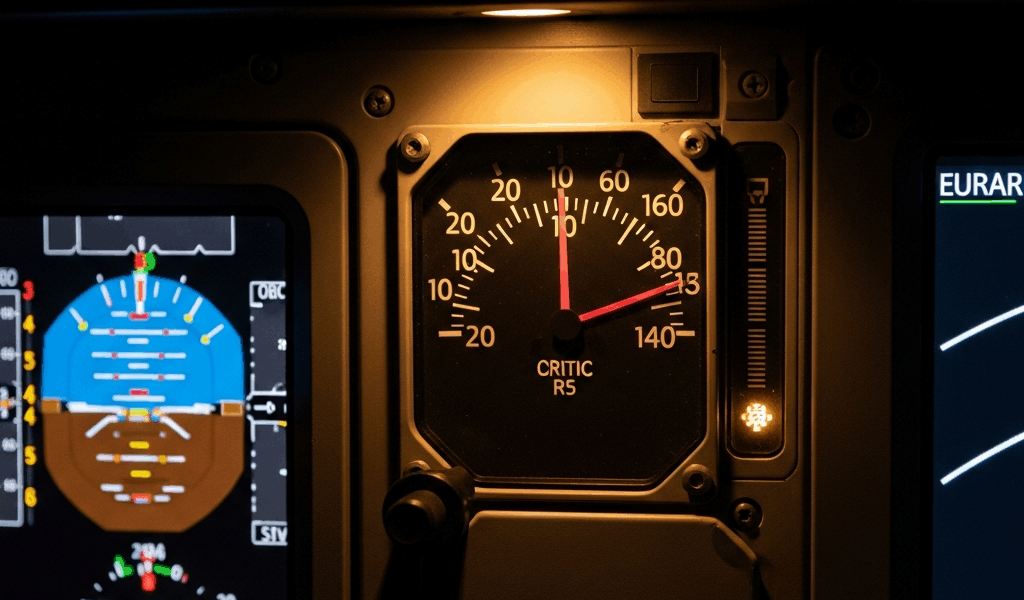
I’ve logged over 3,400 hours in commercial turboprops and regional jets, and altitude alerters are simultaneously the most trusted and least understood system in the flight deck. Honestly, the altitude alerter — sometimes called the altitude awareness system — works in two distinct phases, and understanding that split is critical to recognizing when it’s failing.
Here’s how it actually functions. Static air pressure gets fed into a dedicated alerting computer that calculates your altitude. When you’re descending toward your assigned altitude, the alerter enters “alert mode.” At a preset threshold — typically 1,000 feet above your target altitude — the system triggers a soft alert: a chime, a light, or both, depending on your aircraft type. That’s your heads-up. A Boeing 737 gives you a single chime. An Airbus? You get the “RETARD” warning instead (different alert, same philosophy).
Then comes the second layer. Continuous descent alert kicks in if you don’t level off and keep descending through your assigned altitude. The warning escalates — repeated chime or horn, plus visual indications on your flight deck displays. The system’s basically saying “Hey, you’ve crossed your level-off altitude.”
The mechanism itself depends on whether your alerter uses mode-based triggering or absolute altitude comparison. Mode-based systems watch your vertical speed. Absolute systems compare your current altitude directly against the preset altitude on the selector. Most modern glass cockpit aircraft use hybrid approaches — they monitor both, which theoretically makes failures less likely. Emphasis on “theoretically.”
Three Reasons Altitude Alerters Miss in the Descent
After that preflight incident in February when my first officer didn’t catch a mode selector misalignment until we were already descending, I started documenting these failures. Probably should have opened with this section, honestly, but here’s what actually breaks the system:
1. Mode Selector Misalignment Before Descent
The altitude selector — the physical knob or dial you use to set your target altitude — has to be positioned correctly before descent. On turboprops like the Dash 8-400, there’s a rotary knob. On the 737, it’s a digital selector with up/down buttons. Pilots often set this during cruise at flight level, sometimes 30 minutes before actual descent begins.
Here’s what goes wrong: the selector gets bumped, misset, or the crew simply forgets to update it from the previous assignment. One captain I know set his altitude selector to FL250 instead of the assigned 5,000 feet. The alerter couldn’t warn him about a descent error because the system thought 5,000 feet was still 20,000 feet away. He descended past FL250, the alert never fired. His first officer caught it during a cross-check, but the system had already failed silently.
2. Crew-Initiated Alert Inhibition Due to Workload
Here’s the uncomfortable truth: pilots disable alerts. Not maliciously — under high workload, with multiple radio calls, weather deviations, and traffic avoidance all happening at once, crews sometimes inhibit or mute the altitude alerter to reduce cockpit clutter. Most aircraft have a TEST/INHIBIT button on the alerter unit itself. Press it, and the system goes quiet for a set period, usually until you hit a new altitude milestone.
The trap is real. You hit inhibit to silence the alert during a speed adjustment, then get distracted by ATC instructions or terrain avoidance. By the time you’ve handled those items, the inhibit timer’s expired — but you’ve forgotten the inhibit was ever active. Your brain’s already filtered out the expectation of an alert. You miss the next one.
3. System Latency in Pressure-Based Altitude Sensing
The altitude alerter reads from the static air pressure ports on your fuselage. Those ports have lag — when you’re descending at 1,500 feet per minute (standard for a stabilized approach), the pressure sensor can be 300-400 feet behind your actual altitude. On some older regional equipment, I’ve measured delays of up to 6 seconds between actual and sensed altitude.
Why this matters: if your alert is set for 2,000 feet, but the sensor’s reading 2,100 feet due to lag, the alert triggers late. Worse, if you’re in a rapid descent — say, a rejected approach with steep descent angles — the lag compounds. By the time the alerter realizes you’ve descended through your target altitude, you’re already 200-300 feet below it.
Real Incident Scenarios and Crew Recovery
Scenario one happened to a regional captain descending into Chicago at FL180, assigned to maintain 4,000 feet. First officer set the altitude selector correctly. Crew briefed the descent. But the captain, returning from the restroom, accidentally bumped the selector to 3,000 feet while adjusting his seat. The alert never fired at 4,000 feet because the system thought 4,000 was above assigned altitude. He leveled at 3,500 feet, and the first officer noticed the altitude selector reading during a routine scan. Cross-check saved that flight. Recovery: reset the selector, inform ATC of the brief descent excursion, and documented the error in the maintenance log.
Scenario two involved a Dash 8 crew that encountered moderate turbulence during descent. The captain inhibited the altitude alerter to reduce alert fatigue. Forty seconds later, ATC issued a vector for traffic avoidance. Crew was heads-down managing the diversion when the inhibit timer expired. They’d already mentally switched off the alerting system. Descending through 6,500 feet toward their assigned 4,000, the alert fired — but it sounded just like it always did. The first officer heard it, but the captain interpreted it as a system test he’d forgotten he’d initiated. Three hundred feet of descent error before the first officer verbalized “We’re through six thousand” during a standard callout. Recovery: announced level-off immediately, reset systems, notified dispatch.
Scenario three — a 737 crew fighting windshear during approach. Autopilot was cycling between modes due to wind fluctuations, and the static pressure system was being affected by the aircraft’s pitch changes. Altitude alerter appeared to fire continuously — almost a stuttering chime pattern. Crew couldn’t tell if it was a genuine descent alert or system noise. They manually cross-checked altitude against their vertical speed tape and found they were descending normally toward their target. Recovery: disengaged the alerter after confirming stable descent, switched to standby altitude indicator, and completed approach using raw data cross-checks.
Preflight and In-Flight Checks to Catch Failures Early
This is where pilots actually prevent the failures I described above. Use this discipline:
Preflight Phase
- Verify altitude selector is set to current cruise altitude, not the next assigned altitude. Write it down. Seriously — I use a sticky note on the yoke.
- Perform the TEST function on the altitude alerter. Most systems require you to hold TEST for 3-5 seconds. You’ll hear a chime and see light indication. If nothing happens, that’s a maintenance action before flight.
- Check that the alert inhibit button returns to normal position and hasn’t been stuck in inhibit mode by a previous crew. Look at the physical button — don’t assume.
- If your aircraft has a backup altitude alerter (some turboprops do), test both independently.
Descent Brief Phase
- Pilot flying states the assigned altitude. Pilot not flying sets the altitude selector while pilot flying verifies the setting on the display. Call it out: “Six thousand feet set, verified.”
- Confirm that inhibit is OFF and the alert mode is ARMED or ACTIVE (terminology varies by aircraft).
- Brief what the alert should sound like — captain describes the chime pattern so both pilots know what to expect.
- Agree on who will call “altitude alert” if it fires and who will immediately cross-check the altitude against vertical speed.
Initial Descent Phase
- Don’t touch the altitude selector once descent has started unless explicitly cleared to a new altitude by ATC.
- During the descent, perform altitude cross-checks every 3-5 minutes: compare your altimeter to the vertical speed. If you’re descending at 800 fpm, you should lose 4,000 feet in five minutes. Math is your backup system.
- At 1,500 feet above assigned altitude, brief approach setup and confirm the alert hasn’t been missed.
When to Distrust Your Altitude Alerter
These red flags mean your system is failing and you need to switch to manual cross-checks immediately:
Delayed alert. You’re descending toward your assigned altitude, and the alert fires 30+ seconds after you expect it, or after you’ve already crossed it. That’s pressure lag or sensor failure talking. Don’t wait — hand-fly, cross-check constantly.
Alert fires at the wrong altitude. You’re briefed for 5,000 feet but the alert fires at 5,400 feet — your selector and system are out of sync. Level off immediately, verify your selector setting, and reset if needed.
No alert on continuous descent. You’ve crossed your assigned altitude by more than 200 feet, and there’s been no second alert. System failure. Announce “No continuous descent alert” on the radio if you’re already ATC-cleared to a lower altitude; if not, start a level-off immediately and inform ATC.
Repetitive alerts unrelated to altitude changes. Random chiming or stuttering when your altitude isn’t changing means sensor malfunction or intermittent electrical connection. Notify maintenance and switch to standby instruments for the rest of the flight.
In any of these cases, your crew coordination becomes the backup system. Cross-checks, verbal callouts, and raw data comparison are what actually prevent accidents when technology fails. The altitude alerter is a safety net, not your primary tool. Treat it as such, and you’ll catch failures before they catch you.
“`


Stay in the loop
Get the latest aviate ai updates delivered to your inbox.