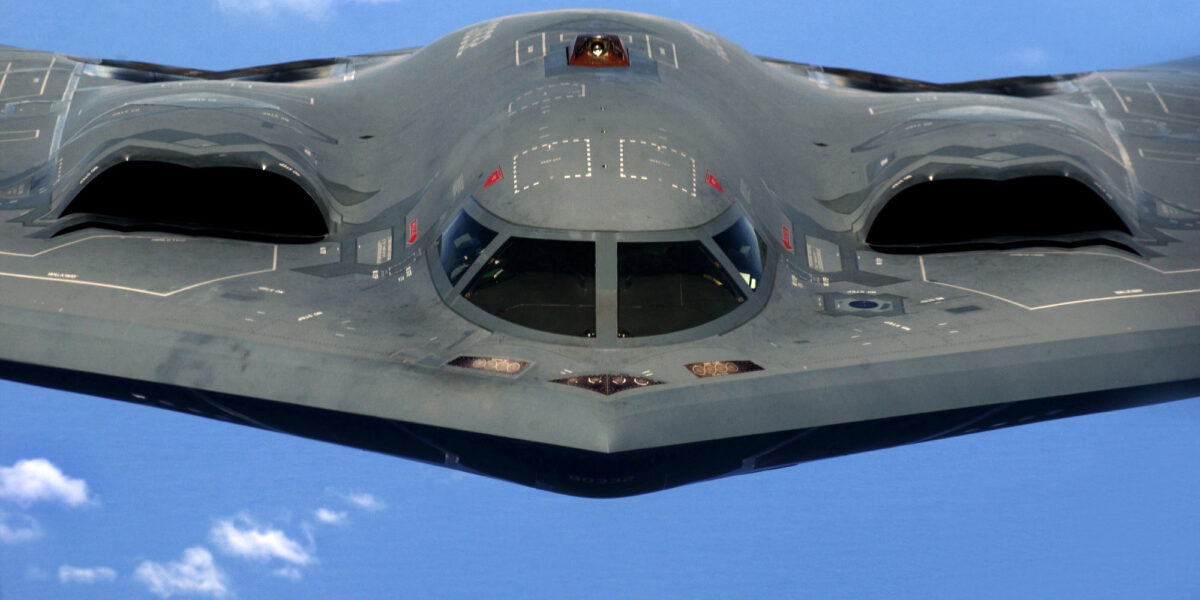
As someone who’s followed military aviation development for years, I learned everything there is to know about the B-2 Spirit’s flight deck—and let me tell you, understanding its systems reveals how Northrop Grumman pulled off engineering that seemed impossible: a bomber that can slip past the world’s most advanced air defenses.
The Glass Cockpit That Changed Everything
The B-2 runs a fully integrated glass cockpit that was genuinely revolutionary when the aircraft entered service in 1997. Four primary color multifunction displays handle flight, navigation, weapons, and systems data in customizable formats. This digital setup replaced hundreds of analog instruments you’d find in older bombers.
Each display shows multiple pages of information, letting crew members set up their workspace differently for different mission phases. Built-in redundancy means if one display fails, its information transfers to the remaining screens without losing capability.
Two Seats, Complete Backup
Two crew members run the B-2 from side-by-side ACES II ejection seats. The mission commander in the right seat handles navigation, weapons, and defensive systems. The aircraft commander on the left focuses on flying and overall mission decisions. Both stations can access everything, so either person can back up the other.
The whole crew interface is built around reducing workload. Highly automated systems manage routine tasks, freeing the crew to focus on tactical decisions. Voice warnings back up the visual displays, and the flight management system executes complex navigation procedures automatically.
Control Systems Behind the Scenes
The control sticks and throttles look conventional, but they’re hiding a sophisticated fly-by-wire system underneath. Four independent computers process every input through a quadruple-redundant digital flight control system before commanding any control surface.
Here’s why that redundancy matters: the B-2’s flying wing design is inherently unstable without computer help. The system makes continuous corrections faster than any human pilot could, turning an unstable airframe into something responsive and stable.
Control surfaces include elevons on the wing trailing edges for pitch and roll, split drag rudders for yaw and slowing down, and a “beaver tail” for extra pitch authority. The flight control computers coordinate everything based on conditions and pilot commands.
Finding Your Way Without Being Found
The B-2’s navigation suite combines multiple technologies for accuracy and reliability. Ring laser gyro inertial navigation systems track position autonomously without transmitting anything. GPS receivers update the inertial data when satellite signals are available safely.
The AN/APQ-181 radar handles terrain following and avoidance for low-level penetration missions. This low-probability-of-intercept radar maps terrain and targets while minimizing detection risk. It also supports precision weapons delivery.
Managing 40,000 Pounds of Ordnance
The weapons officer manages ordnance through dedicated displays showing bomb bay status, target assignments, and release sequences. The B-2’s two internal weapons bays hold 40,000 pounds—everything from nuclear gravity bombs to precision-guided conventional weapons.
The GPS-Aided Targeting System integrates GPS data with radar returns for precision strikes. This enables delivery of GPS-guided weapons like JDAMs in any weather. The B-2 can hit multiple targets in a single pass with different weapons—that’s a significant capability.
Staying Hidden
The AN/APR-50 defensive management system provides threat warning and situational awareness. Antennas distributed around the airframe detect radar emissions and classify threats, displaying the information graphically so the crew can assess risk and adjust tactics.
Rather than active jamming that would give away its position, the B-2 depends mainly on stealth for protection. The cockpit systems help the crew avoid detection by routing around known threats and monitoring for unexpected radar activity.
Staying Connected Worldwide
Secure communications systems link the B-2 to command authorities anywhere in the world. Satellite terminals provide connectivity for mission updates, target changes, and status reports. The aircraft can receive modified targeting data mid-flight and adjust weapons accordingly.
Low-probability-of-intercept communications minimize the risk of revealing position. Link 16 tactical data links offer interoperability with other military assets when the mission allows it.
Keeping the B-2 Current
Recent programs improved radar capabilities, updated processors, and integrated new weapons. The cockpit architecture allows software updates without major hardware overhauls.
These upgrades keep the B-2 effective until the B-21 Raider reaches full operational capability. The lessons learned from B-2 cockpit design directly influenced the newer bomber’s crew interface, which shows just how much the original designers got right.




Stay in the loop
Get the latest aviate ai updates delivered to your inbox.