
As someone who’s tracked this technology from academic papers to airline deployments, I learned everything there is to know about how deep learning is actually changing aircraft navigation. Today, I will share it all with you.
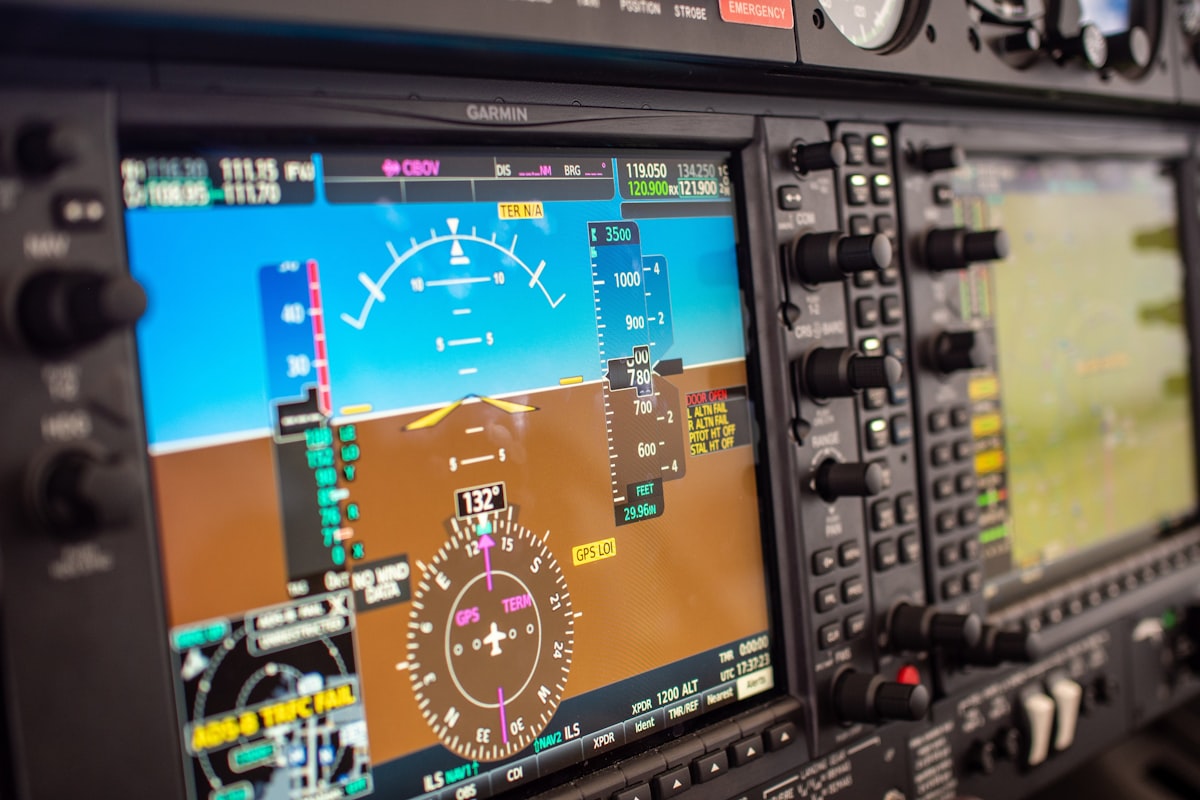
Where Traditional Navigation Falls Short
Modern aircraft navigation relies on three main technologies:
- GPS — Satellite-based positioning accurate to meters
- Inertial Navigation Systems (INS) — Self-contained systems using accelerometers and gyroscopes
- Ground-based navaids — VOR, DME, and ILS for approach guidance
Highly reliable stuff that’s gotten us through decades of safe flight. But these systems have limitations that neural networks can address:
- GPS can be jammed, spoofed, or simply unavailable in certain environments
- INS drifts over time without correction
- Traditional systems don’t optimize routes in real-time based on changing conditions
- Weather and traffic avoidance still relies heavily on pilot judgment
Neural Network Route Optimization
Deep learning transforms flight planning from static route calculation to dynamic optimization. Here’s what changes:
Processing Way More Variables
Neural networks handle far more factors than traditional flight planning systems:
- Weather patterns — Not just current conditions but predicted evolution over the flight
- Jet streams — Finding optimal altitudes for wind assistance or avoidance
- Traffic density — Predicting congestion and suggesting alternatives
- Airspace constraints — Military activity, temporary restrictions, overflight fees
- Aircraft performance — Actual performance vs. book values for the specific aircraft
- Fuel prices — Tankering decisions based on price differentials at different stations
Continuous Updates
Unlike traditional flight plans filed before departure, neural network systems continuously update routes during flight as conditions change. An aircraft might adjust altitude three times during a transatlantic crossing as the AI finds better wind conditions. The route you depart on isn’t the route you’ll fly.
Vision-Based Navigation
Terrain Matching
Deep learning systems compare camera images to stored terrain databases, determining position without GPS. Applications include:
- Military aircraft operating in GPS-jamming environments
- Cruise missiles and autonomous weapons systems
- Backup navigation for commercial aircraft
Urban Navigation for Drones
Delivery drones and urban air mobility vehicles navigate between buildings using computer vision. Neural networks identify landmarks, detect obstacles, and plan paths through complex urban environments where GPS signals bounce between buildings and become unreliable.
Improving Inertial Navigation
AI is making traditional inertial navigation better:
Error Correction
Neural networks learn the characteristic drift patterns of specific INS units. Every INS drifts differently, and the AI learns those idiosyncrasies, predicting and correcting errors before they accumulate. This extends the time aircraft can navigate accurately without GPS updates.
Sensor Fusion
Deep learning optimally combines data from multiple sensors—GPS, INS, barometric altitude, radar altimeter—producing position estimates more accurate than any single sensor could provide alone.
Failure Detection
Neural networks identify when sensors are providing faulty data, automatically excluding bad inputs from navigation solutions. The system knows when something’s wrong before the crew does.
Traffic Prediction and Avoidance
Neural networks predict traffic flows, enabling proactive rather than reactive routing:
- Departure time optimization — Suggesting delays when predicted airspace congestion is severe
- Corridor prediction — Anticipating which routes will become congested
- Conflict-free trajectory planning — Finding paths that won’t require controller intervention
- 4D trajectory management — Optimizing not just path but timing along that path
Weather Integration
Deep learning excels at processing complex weather data:
Convective Weather Prediction
Neural networks predict thunderstorm development and movement, routing aircraft around cells before they become hazards. Traditional radar shows current weather; AI predicts where weather will be when you get there.
Turbulence Avoidance
Machine learning models correlate atmospheric data, pilot reports, and radar returns to predict turbulence along routes. Airlines report 15-20% reductions in turbulence encounters using AI routing. Fewer complaints from passengers, fewer injuries, less structural stress on the aircraft.
Icing Prediction
Neural networks identify conditions likely to produce aircraft icing, suggesting altitude changes or route modifications to avoid hazardous conditions before you fly into them.
Autonomous Flight Applications
Neural network navigation is essential for autonomous aircraft:
Urban Air Mobility
Electric vertical takeoff and landing (eVTOL) aircraft will navigate complex urban environments autonomously. Neural networks process sensor data to:
- Maintain safe separation from buildings and other aircraft
- Navigate to precise landing spots
- Handle degraded conditions like fog, rain, and GPS interference
- Manage contingencies when things go wrong
Cargo Drones
Long-range cargo drones require navigation systems that work across varied environments—from airports to remote delivery locations. Neural networks provide flexibility traditional systems lack.
How Airlines Are Deploying This
Airlines are rolling out neural network navigation in phases:
Ground-Based Systems First
Flight planning departments use AI optimization before aircraft even depart. These systems are lower risk because humans review all recommendations before anything gets filed.
Advisory Systems Next
Onboard AI provides recommendations to pilots, who make final decisions. Electronic Flight Bags increasingly include AI-powered route suggestions that pilots can accept or ignore.
Integrated Systems Eventually
Future implementations may connect AI navigation directly to flight management systems, with pilots supervising rather than manually implementing changes.
The Hard Problems
Deploying neural networks for aircraft navigation faces real obstacles:
- Certification nightmares — Regulators require explainability that neural networks inherently lack
- Validation challenges — Proving AI systems work correctly across all possible conditions
- Computing requirements — Deep learning needs processing power not always available onboard
- Training data gaps — Edge cases may not appear in historical data
- Security concerns — Neural networks can be fooled by carefully crafted adversarial inputs
Research Frontiers
Academic and industry research is pushing neural network navigation forward:
- Reinforcement learning — AI that learns navigation strategies through simulation
- Graph neural networks — Modeling airspace as networks for optimization
- Neuromorphic computing — Brain-inspired chips for efficient onboard AI
- Federated learning — Training models across airline fleets while protecting proprietary data
Where This Is Going
Within a decade, neural networks will likely be integral to all aviation navigation:
- Fully autonomous cargo operations — Large freight aircraft flying without pilots
- Integrated traffic management — AI systems coordinating entire airspace flows
- Personalized routing — Routes optimized for individual passenger preferences
- Space-air-ground integration — Seamless navigation across all domains
The Bottom Line
Neural networks are adding a layer of intelligence to aviation navigation that complements traditional GPS and inertial systems. From optimizing transcontinental routes to guiding drones between buildings, these AI systems process complex, real-time data in ways that were impossible just years ago.
The technology works. The challenge is getting it certified, deployed, and trusted. That’s where the real work happens.



Stay in the loop
Get the latest aviate ai updates delivered to your inbox.