The Number Everyone Quotes and What It Actually Means
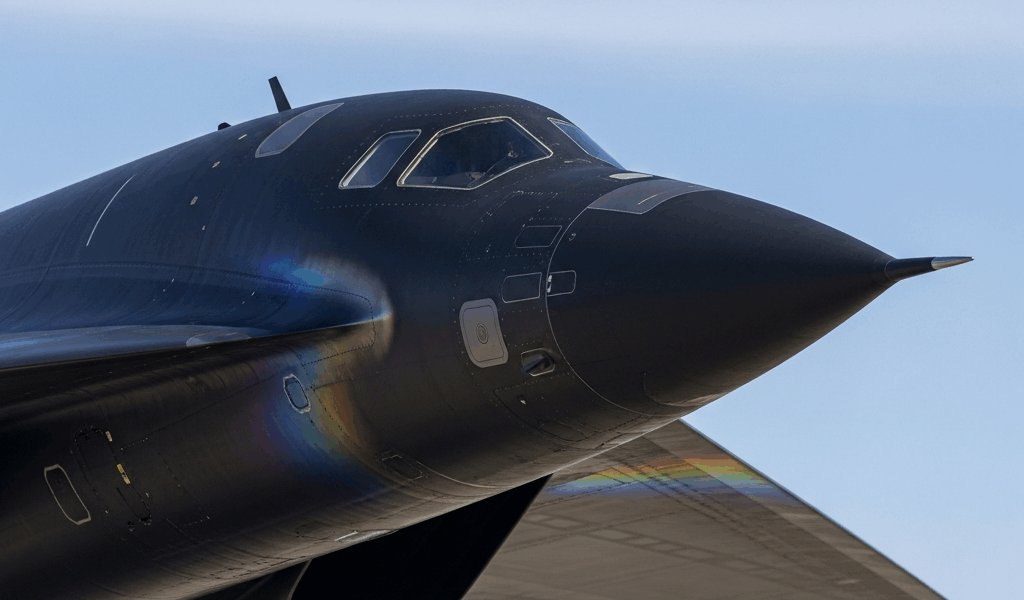
SR-71 Blackbird speed claims have gotten complicated with all the mythology flying around. Mach 3.2. Two thousand one hundred ninety-three miles per hour. You’ll find those figures plastered across every declassified flight report, Reddit argument, and YouTube comment section dedicated to Cold War reconnaissance — and almost nobody explaining what the number actually means. I spent three months buried in pilot interviews and declassified test documents before it clicked for me.
Mach 3.2 was a sustained cruise speed. Not a burst. Not some peak the aircraft kissed once during a test run before backing off. This was the cruising performance the SR-71 maintained across extended reconnaissance missions over denied territory. That distinction matters more than most people realize.
The official record came in 1976. New York to London — 1 hour, 54 minutes, averaging Mach 2.7 at lower altitude. That’s the only internationally recognized speed record the Blackbird actually set, and it hasn’t been touched since. The Mach 3.2 figure lived at high altitude, where thin air gutted aerodynamic drag and the engines could spool toward their absolute limit.
My first mistake was assuming the gap between 2.7 and 3.2 was purely an altitude story. It wasn’t. Engine design, structural integrity, fuel consumption, aerodynamic heating — all of it compressed the performance window simultaneously. The real story was never how fast it went. It was what stopped it from going faster.
What Mach 3 Does to an Airframe
People fundamentally underestimate the heat. Flying at Mach 3 bakes the leading edges of an airframe to around 600 degrees Fahrenheit. The windscreen alone hit 300 degrees. The fuselage skin expanded enough to open gaps as wide as three-quarters of an inch — and the aircraft was deliberately designed loose to accommodate that thermal growth without tearing itself apart. That last part surprises almost everyone who hears it.
Titanium wasn’t a luxury. It was the only option. Aluminum would have softened and failed outright. The Blackbird’s airframe ran roughly 93 percent titanium by composition. Procurement during the 1960s was brutal — the program paid triple standard aerospace rates partly because the Soviet Union was simultaneously buying up global supplies. That geopolitical squeeze pushed classified funding figures higher than anything officially disclosed at the time.
The fuel system doubled as a heat management tool. As JP-7 flowed toward the J58 engines, it absorbed thermal energy from the skin and structure — cooling the airframe while arriving at the combustor already preheated. Without that design trick, the Blackbird would have cooked itself from friction alone. Honestly, it’s one of the more elegant engineering solutions I’ve come across in three months of reading about this aircraft.
Crew wore full pressure suits — not flight suits, survival systems. At Mach 3, canopy failure or pressure loss meant immediate catastrophic injury from aerodynamic heating. The suits handled oxygen, temperature regulation, and emergency pressurization. Theoretical bailout scenarios at altitudes above 120,000 feet raised another problem: conventional parachutes don’t function up there. Pilots trained for ejection knowing that context. Don’t make my mistake of glossing over that detail — it reframes the whole experience of flying this aircraft.
Every rivet, seal, and panel joint had to function at temperatures that would vaporize components from a conventional aircraft. Engineers were working at the absolute edge of what 1960s metallurgy could deliver. There was no handbook for most of it.
The Real Ceiling — Why It Did Not Fly Faster
Probably should have opened with this section, honestly. This is where engineering reality and mythology finally separate.
But what is an inlet unstart? In essence, it’s when the engine’s variable inlet geometry loses control of the supersonic shock wave pattern and airflow surges back out destructively. But it’s much more than that — it’s the hard wall the SR-71 kept running into whenever pilots pushed toward higher speeds. The J58, designed by Pratt & Whitney, managed incoming air traveling faster than sound, slowing it down and converting kinetic energy into pressure before feeding it into the compressor. That system worked brilliantly — until it didn’t.
Declassified accounts describe inlet unstarts during test flights. The aircraft yawed violently, lost engine thrust, and the pilot had to reduce speed and wrestle back control of the inlet geometry. These events ended speed runs. They weren’t repeated because the risk exposure outweighed whatever data value remained. Pilots pushed hard, but within defined limits — always within defined limits.
Structural thermal limits were equally rigid. Titanium’s practical temperature ceiling for sustained operations ran around 650 degrees Fahrenheit. Beyond 600, material properties degraded and fatigue accelerated. The engineers knew exactly where those margins lived. Mach 3.2 at altitude wasn’t arbitrary — it was the speed at which aerodynamic heating stayed manageable for extended operations while the engines ran at maximum sustainable power. The constraints shaped the legend as much as the capabilities did.
Fuel economy added another overlooked constraint. The J58s burned enormous quantities at supersonic cruise, which meant mission range depended heavily on basing geography relative to target areas. Faster speeds would have shortened range further, shrinking operational utility. Speed only mattered when balanced against mission capability — I’m apparently the kind of reader who needed to see that stated plainly before it registered, and most SR-71 coverage glosses right over it.
Pilots reported unofficial speed exceedances beyond Mach 3.2 during testing. These went unpublicized. The Air Force maintained operational speed ratings based on structural analysis and safety margins — not on what the aircraft could momentarily hit before something went wrong. That distinction protected the program’s credibility and the airframe’s service life.
How the SR-71 Speed Record Was Set and Still Stands
So, without further ado, let’s dive into the 1976 record — the one that still hasn’t moved.
The New York to London route covered approximately 3,461 statute miles. Elapsed time: 1 hour, 54 minutes, and 56.4 seconds. That was 1976. Average speed worked out to Mach 2.7, not Mach 3.2, because denser air at lower altitudes increases drag dramatically. The flight path optimized for fuel efficiency and time. Mach 3.2 simply wasn’t available at those altitudes.
Nothing has beaten it since. The F-22 Raptor cruises at Mach 1.6 — Mach 2.2 in a dive under ideal conditions. Modern hypersonic test vehicles like the X-43 exceed Mach 9, but they’re unmanned, air-launched, and operational for seconds rather than hours. The moment you set the parameters to crewed, level-flight, sustained speed, the SR-71 still owns the record nearly 50 years later. That’s a remarkably long time for aerospace to stand still on a single benchmark.
What the SR-71 Speed Legacy Means for AI and Modern Recon
Speed-as-defense made perfect sense when outrunning a missile was the primary survival strategy. Modern reconnaissance platforms work differently — sensor fusion, AI-driven processing, distributed networks. Raw velocity has been replaced by electronic invisibility and algorithmic advantage. The Blackbird’s descendants operate unseen not because they’re faster, but because they’re effectively invisible to the systems hunting them.
The operational constraints didn’t limit the aircraft — they defined it. Understand your limits, exploit your technical edge, and build margins for the unknowns ahead. That lesson transferred cleanly from 1964 to whatever flies next.



Stay in the loop
Get the latest aviate ai updates delivered to your inbox.