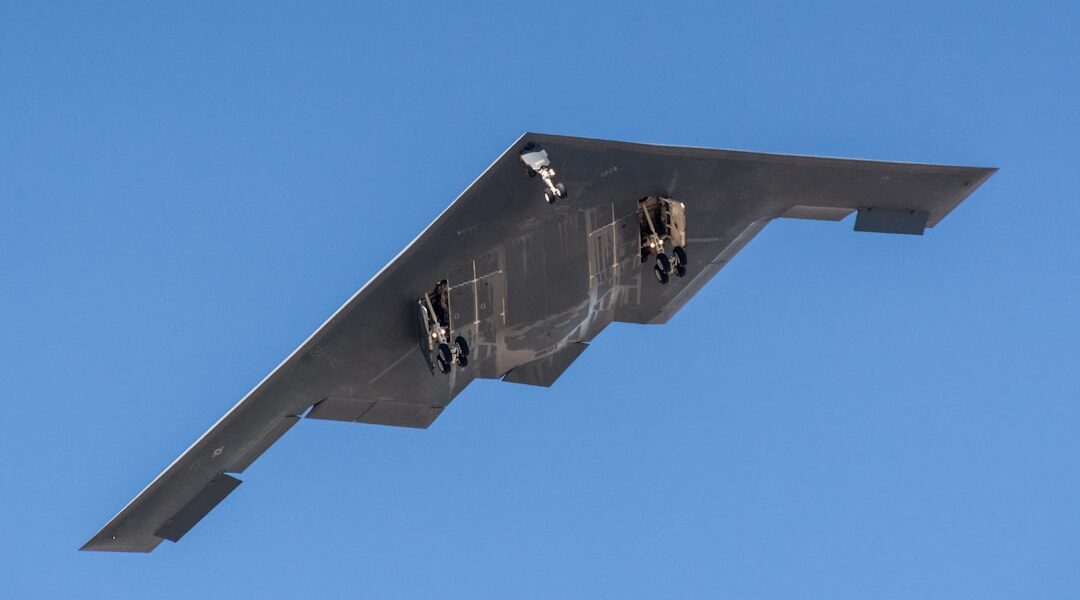
What is actually known about the B-2 Spirit cockpit? Public U.S. Air Force sources confirm a two-pilot flight deck: the pilot sits on the left and the mission commander sits on the right. Air Force budget documents also identify eight primary cockpit displays. Beyond those basics, many detailed controls, mission-system functions, and procedures remain sensitive or classified.
This guide separates confirmed public information from internet speculation. That distinction matters because images labeled “B-2 cockpit” frequently show another aircraft, a simulator, or an AI-generated interior. It also matters because the B-2 remains an operational nuclear-capable bomber; the absence of public detail is deliberate.
B-2 cockpit facts at a glance
| Question | Confirmed public answer |
|---|---|
| How many people are in the cockpit? | Two pilots |
| Where do they sit? | Pilot on the left; mission commander on the right |
| How many primary displays? | Eight, according to the Air Force B-2 Display Modernization program |
| How far can the B-2 fly without refueling? | Approximately 6,000 nautical miles |
| How long can missions last? | More than 30 hours is documented; a 44.3-hour combat mission is also officially recorded |
| Can the public tour an operational cockpit? | No routine public cockpit access is documented |
Who sits where inside the B-2?
The current U.S. Air Force B-2 fact sheet gives the clearest authoritative description: the aircraft carries two pilots, with the pilot in the left seat and mission commander in the right. The same source contrasts that small crew with four aboard the B-1B and five aboard the B-52.
That does not mean every task can be cleanly assigned from public sources. The B-2 combines flight, navigation, communications, defensive awareness, mission management, and weapons employment in one two-person workspace. Detailed checklists and division of duties vary by mission and are not fully described in open Air Force material. Claims that one seat exclusively “flies” while the other exclusively “fights” the aircraft should therefore be treated as an oversimplification.
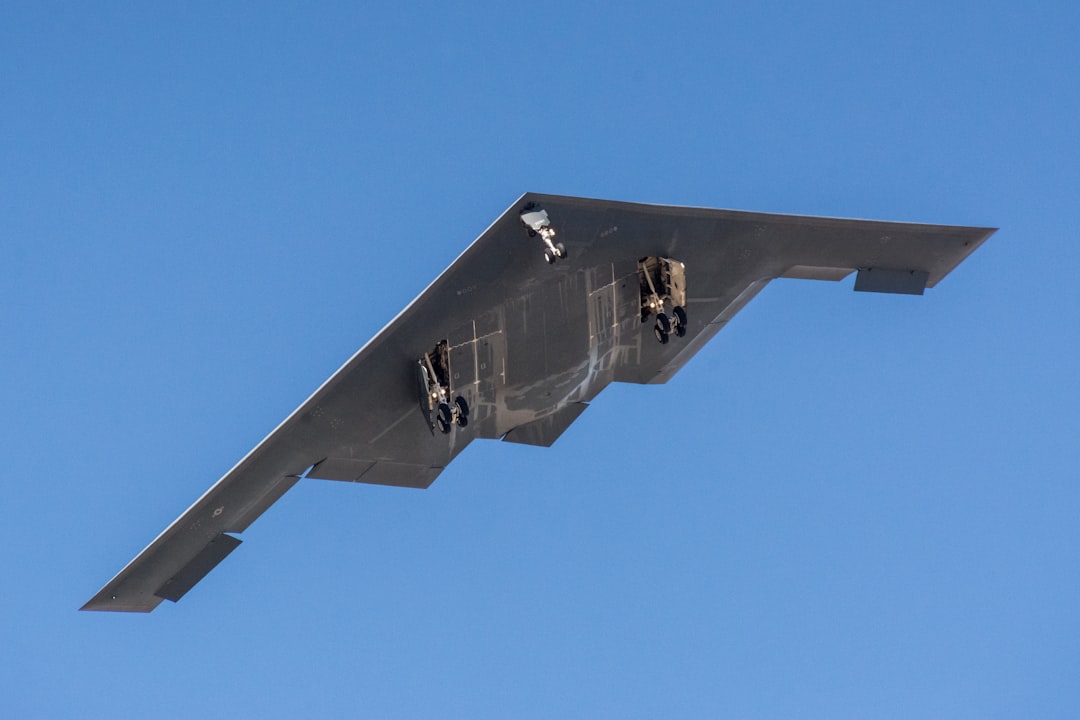
What do B-2 pilots see on the instrument panel?
The most defensible public number is eight primary cockpit displays. The Air Force’s fiscal-year 2025 aircraft procurement documentation says the B-2 Display Modernization program will replace all eight. Importantly, that document describes the existing units as legacy cathode-ray-tube multi-function displays—not the modern touchscreens or generic color LCD panels often depicted in mislabeled images.
The displays support the information a two-person crew needs to operate a long-range bomber, but the exact pages, modes, symbology, sensor presentation, and control logic are not comprehensively available in current official public material. Public photographs can show the general panel arrangement, yet a photograph alone does not establish what each screen displays during a mission.
The modernization effort is practical as well as technological. Air Force budget documents say the old displays face obsolescence, rising failures, and a disappearing repair base. The replacement program is intended to install integrated modern display units and updated display software. Separately, the Air Force Life Cycle Management Center reported in 2025 that B-2 work continues on avionics, software, communications, sensors, and survivability.
How pilots navigate with limited outside visibility
The B-2 is designed to operate at high altitude and penetrate defended airspace, so mission effectiveness depends on instruments, sensors, communications, and extensive planning—not sightseeing through the windows. The Air Force says the aircraft’s low-observable design combines its flying-wing shape, composite materials, special coatings, and reductions in radar, infrared, acoustic, visual, and electromagnetic signatures. It also explicitly notes that many aspects remain classified.
It is reasonable to say the crew relies heavily on avionics. It is not responsible to invent a precise sensor picture or claim a specific display mode without documentation. Public sources confirm continuing upgrades designed to improve the crew’s battlefield picture and beyond-line-of-sight communications, but they do not reveal the complete operational interface.
How can two pilots handle missions longer than 30 hours?
Long duration is not marketing language. The National Museum of the U.S. Air Force says typical combat missions described in its exhibit material lasted more than 30 hours and required multiple aerial refuelings. Whiteman Air Force Base records a 44.3-hour B-2 combat mission during Operation Enduring Freedom.
Official Air Force reporting shows that preparation includes sleep scheduling, diet, medical oversight, tanker coordination, and mental preparation. Both pilots and the much larger support team contribute to endurance. A 24-hour Pacific training mission, for example, involved flight doctors monitoring pilots’ sleep and diet before the flight.
What about the widely repeated stories of a cot, microwave, or toilet behind the seats? Some secondary accounts make those claims, but the current official sources used here do not provide enough detail to verify a specific layout, dimensions, or rest schedule. The safe conclusion is narrower: two pilots conduct exceptionally long missions, fatigue management is planned, and the public record does not justify treating every viral “inside the B-2” diagram as authentic.
What the cockpit is designed to accomplish
The B-2 is a multi-role heavy bomber capable of carrying conventional or nuclear weapons. The Air Force lists high-subsonic speed, an approximately 6,000-nautical-mile unrefueled range, a 50,000-foot ceiling, and a 60,000-pound payload. Those figures help explain the cockpit’s central challenge: two people must manage a large, long-range aircraft through takeoff, aerial refueling, navigation, mission execution, and recovery.
Automation reduces crew size, but it does not make the mission simple. Air Force modernization work focuses on getting useful information to the operators, improving communications, maintaining sensors, and keeping the aircraft supportable. The cockpit is best understood as the human interface to that larger system—not as eight screens with a list of fixed functions that can be reconstructed from internet photographs.
B-2 versus B-21 cockpit: what is confirmed?
The B-21 Raider is the B-2’s eventual successor, but it should not yet be described as operational. As of June 2026, official Air Force reporting says B-21 aircraft are conducting developmental and operational testing at Edwards Air Force Base, including mission-system and weapons-integration work. An Air Force Global Strike Command fact sheet identifies an initial capability target of 2028.
The Air Force has confirmed an open-systems approach for the B-21 program, intended to make future upgrades easier. It has not publicly released enough cockpit detail to support confident claims about touchscreen layouts, helmet displays, distributed-aperture cameras, crew-rest facilities, or exact crew duties. Visible differences in exterior windows do not prove what sensors or displays are installed behind them.
For the current program status, see the Air Force’s April 2026 report on B-21 flight testing and aerial refueling.
Can you visit a B-2 cockpit?
The National Museum of the U.S. Air Force in Dayton displays a B-2 structural test airframe—not the operational “Spirit of Ohio.” The museum explains that the display aircraft was built without engines or instruments for fatigue testing. Its exhibit is valuable for seeing the flying-wing airframe up close, but it is not evidence of an accessible, complete operational cockpit.
That corrects another common internet error: the museum’s B-2 incorporates a nose panel from the Spirit of Ohio, but the displayed airframe itself is a structural test article. Visitors should check the museum’s current exhibit information before traveling.
Frequently asked questions
Does the B-2 cockpit have two seats?
Yes. The Air Force identifies a pilot in the left seat and mission commander in the right seat.
Does the B-2 have eight cockpit screens?
Air Force procurement documents identify eight primary multi-function display units. Those documents describe the legacy units as CRT-based and scheduled for modernization.
Do B-2 pilots sleep during a mission?
Official reports confirm deliberate fatigue preparation for very long missions, including sleep scheduling and medical oversight. Public official sources do not provide enough detail to verify every claim about sleeping arrangements or exact rest rotations inside the aircraft.
Is the B-21 Raider already operational?
No. Official Air Force reports in 2026 describe the B-21 as undergoing flight test and moving toward operational service.
Bottom line
The reliable public picture of the B-2 cockpit is impressive without embellishment: two pilots, eight primary displays, intercontinental reach, repeated aerial refueling, and missions documented beyond 40 hours. The honest boundary is equally important. Exact operational screens, procedures, sensor presentations, and much of the interior remain unavailable or classified. Any guide that fills those gaps with cinematic detail is showing confidence, not evidence.




Stay in the loop
Get the latest aviate ai updates delivered to your inbox.