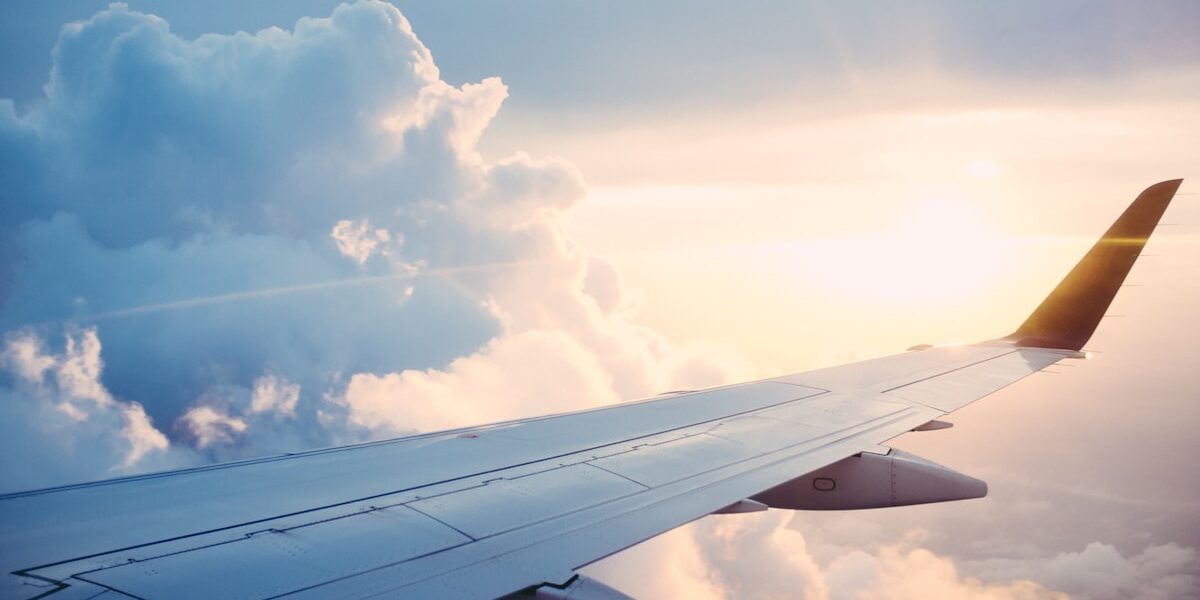
AI can contribute to systems that fly an aircraft, and autonomous aircraft have completed real test flights, but that does not mean today’s airline flights are controlled by a general-purpose AI pilot. Commercial aircraft automation is mostly deterministic, certified avionics operating under defined modes, with pilots responsible for managing the flight.
Autopilot is not the same as AI
An autopilot can hold heading, altitude, speed, or a programmed flight path. A flight-management system can calculate and follow a route. These are sophisticated forms of automation, but they generally execute designed logic and mode behavior rather than learning how to fly during normal operations.
Machine learning becomes relevant when a system infers patterns from data—for example, recognizing objects, predicting trajectories, classifying anomalies, or recommending a response.
Where autonomous flight already exists
Uncrewed aircraft routinely use automated navigation and control. Research and test programs also explore increasingly autonomous contingency management, perception, routing, and landing. NASA’s Autonomous Aircraft Operations work includes research on uncrewed traffic behavior, lost command links, and risk-aware contingency routing.
These demonstrations prove that an aircraft can perform many tasks without a pilot physically manipulating the controls. They do not by themselves prove readiness for unrestricted passenger service in every weather, airport, traffic, and failure condition.
What an AI-enabled aircraft must handle
- Normal flight-path management
- Weather and traffic avoidance
- Sensor disagreement and degraded data
- Equipment failures and cascading faults
- Communication loss
- Unexpected runway or airport conditions
- Coordination with air traffic control
- Safe diversion and landing
The difficult part is not demonstrating a successful nominal flight. It is establishing reliable behavior across foreseeable failures and edge cases, with acceptable probabilities and recovery strategies.
Why certification is challenging
The FAA explains that learned AI differs from conventional engineered systems because performance comes partly from data rather than only from explicitly designed rules. Its AI Safety Assurance Roadmap addresses training data, model behavior, safety monitoring, and integration with aircraft certification.
EASA’s human-centric AI roadmap similarly treats assistance, human-machine collaboration, and more autonomous functions as stages with different assurance needs.
Could AI replace airline pilots?
Technically, more cockpit tasks can be automated. Operationally, replacing both pilots is a much broader problem. The system would need an accepted safety case, reliable ground and communications infrastructure, cybersecurity protection, revised operating rules, maintenance procedures, and a way to manage abnormal situations without creating new single points of failure.
Cargo, drones, or aircraft operating in constrained environments may adopt higher autonomy sooner because the risk model and mission are different. Passenger airline service has a very high assurance threshold and a complex operating environment.
What AI is more likely to do first
Before an AI becomes the sole pilot, it is more likely to support crews through weather analysis, anomaly detection, checklist or procedure retrieval, traffic prediction, route recommendations, and monitoring for conditions a human may miss. Those bounded applications can be evaluated independently and designed with clear handoff behavior.
The honest answer
AI can help fly a plane and may eventually control more complete missions, especially for uncrewed aircraft. Today, however, scheduled passenger aircraft do not rely on a free-learning AI captain. They use layers of certified automation supervised by trained pilots. The transition toward greater autonomy will be incremental, application-specific, and constrained by safety evidence.
Read how pilots use AI-related tools today and the likely future adoption path for aviation AI.



Leave a Reply