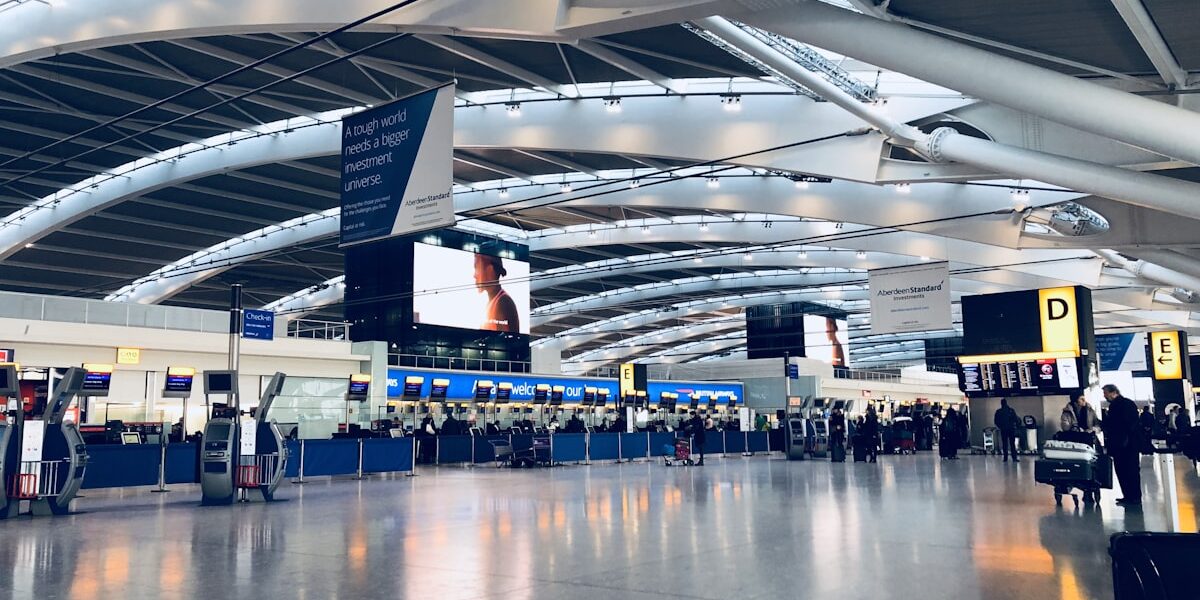
AI can help aviation by finding patterns across operational data, predicting disruptions and equipment problems, improving planning, and supporting people who make safety and efficiency decisions. The strongest applications solve a defined problem and keep authority, confidence, and failure behavior clear.
Predict maintenance problems earlier
Models can compare sensor trends, component histories, fault messages, and operating conditions to identify unusual behavior. Earlier inspection may reduce unscheduled removals and delays. The FAA’s AI Safety Assurance Roadmap discusses digital-twin and preventive-maintenance applications while emphasizing the need for assurance across the aircraft lifecycle.
Improve weather and disruption planning
Weather affects routes, fuel, airport capacity, crew schedules, and passenger connections simultaneously. AI can help combine these data and estimate downstream effects earlier. The benefit is not a perfect forecast; it is better prioritization and more time for dispatchers, crews, airports, and operations teams to respond.
Support safer decisions
Safety teams can use language and pattern-analysis tools to organize reports, identify recurring hazards, and prioritize records for expert review. EASA’s overview of AI in aviation identifies safety-risk management, turbulence and icing prediction, airport monitoring, cybersecurity, and decision support as potential benefit areas.
Reduce avoidable delays
Airline operations involve aircraft rotations, gates, crews, maintenance restrictions, passenger connections, and airspace constraints. Optimization models can propose recovery options when one disruption begins affecting the rest of the network. Human operators must still evaluate legal, safety, and service constraints.
Make manufacturing inspection more consistent
Computer vision and anomaly detection can help reviewers inspect parts or production imagery. AI can also identify changes in process data that merit investigation. It should complement traceable quality-control processes rather than turn an unexplained model score into automatic acceptance.
Help manage airspace
Potential uses include trajectory prediction, demand-capacity balancing, conflict detection, and options for weather reroutes. NASA’s Autonomous Aircraft Operations research includes traffic prediction and contingency-management topics relevant to future uncrewed operations.
Detect airport hazards
Image and sensor systems may help identify foreign objects, unauthorized drones, perimeter events, or unusual surface activity. A practical design defines how an alert is confirmed and who acts on it; false alarms and missed detections both matter in an airport environment.
Strengthen cybersecurity analysis
Behavioral models can help identify unusual network or system activity, but attackers can also target models and data pipelines. AI is therefore one layer in a broader security program, not a replacement for access control, segmentation, patching, monitoring, and incident response.
What makes an aviation AI use case credible?
- A clearly defined operational problem
- Representative, governed data
- Measured error rates and confidence limits
- A safe response when the model is uncertain or unavailable
- Human authority and escalation rules
- Cybersecurity and configuration control
- Monitoring for performance changes after deployment
Where AI should not be oversold
AI cannot make incomplete data complete, guarantee an accurate forecast, or remove the certification burden from a safety-critical function. It may also create new workload if operators receive unexplained scores or excessive alerts. ICAO’s discussion of AI in aviation highlights both opportunity and the need to keep humans central in a safety-critical environment.
Bottom line
AI helps aviation most when it improves prediction, prioritization, and decision support around a bounded task. Its value depends on operational integration and safety evidence, not the sophistication of the model alone.
Explore how aerospace organizations use AI across the lifecycle, how pilots use AI-related tools, and the likely future of aviation AI.




Leave a Reply