Inside the B-2 Spirit Cockpit — What Pilots Actually See and Do

You strap into the left seat and the first thing you notice isn’t the stealth skin outside or the flying wing shape that made this aircraft famous. It’s the wall. Eight color LCD displays stare back at you from a 25-square-foot cockpit that was built for two people and not one square inch more. Each screen is pulling data from sensors that cost more than most office buildings. This is the B-2 Spirit cockpit — the most capable glass cockpit ever put into production, crammed into an aircraft with no tail, minimal windows, and the range to strike a target on the other side of the planet without stopping.

Most of what’s written about this cockpit reads like someone describing a photograph they found online. This is different. What follows covers what pilots actually see when they strap in, what they’re touching for the next 40 hours, how they rest, how they eat, and how the mission actually works from the crew’s perspective — not a journalist’s.

What You See When You Sit Down: The Glass Cockpit Layout

Two pilots, side by side. Left seat is the aircraft commander; right seat is the mission commander. Both sit in McDonnell Douglas ACES II zero-zero ejection seats — zero altitude, zero airspeed capable. The pressurized compartment stands tall enough for a six-foot pilot to stand upright, which matters more than it sounds when you’re about to spend 40 hours inside it.

The display architecture is what aviation enthusiasts want to know about first, and it’s worth understanding just how ahead of its time this setup was in 1997. The original configuration ran eight color LCD cockpit displays (CLCDs), each roughly six inches square. Not the monochrome green scopes you’d find in the F-16s and F-15s sharing the same ramp. Full color, glass cockpit, from day one — which at the time put the B-2 ahead of every other aircraft the Air Force was flying.

Each crew station gets four primary multifunction displays in a two-by-two grid. The Vertical Situation Display (VSD) covers altitude, airspeed, and attitude — your primary flight instruments. The Horizontal Situation Display (HSD) is the situational awareness picture: navigation track, threat overlay, target data. Those are the two you’re looking at most of the time. The remaining displays handle engine data, systems monitoring, fuel state, and offensive/defensive systems.

No touchscreens — that’s worth saying plainly. The entire interface runs on bezel buttons along the edges of each display and a trackball cursor control between the seats. You navigate menus with the trackball, confirm with the bezel buttons. Pilots coming from modern glass cockpits with touch interfaces have to consciously slow down in the B-2. The system rewards deliberate inputs, not swipes. Once you’re trained on it, the physical feedback is actually an advantage in turbulence or high workload — you can feel what you’re pressing.

The Cockpit Modernization Program (CMP) in the mid-2010s refreshed the display hardware but kept the same interface philosophy intact. New color panels replaced aging LCDs. The Flexible Display System (FDS) brought better processing and improved radar imagery. What CMP didn’t touch: the fundamental layout, the bezel-and-trackball control scheme, the crew complement. The human factors design from the original program held up well enough that nobody saw reason to change it after 20 years in service.

Military pilot at bomber cockpit station with multifunction displays illuminating the B-2 Spirit cockpit

The Instruments That Run a 2.1 Billion Dollar Aircraft

Saying the B-2’s avionics are “advanced” doesn’t capture what they actually have to do. The aircraft has to depart Missouri, penetrate defended airspace on the other side of the world, acquire targets in real time, deliver weapons, and recover — with two crew members and absolutely no possibility of calling for help mid-mission. The avionics aren’t a feature. They’re the operational foundation the entire concept rests on.

Navigation is a four-system fusion: GPS, ring-laser gyroscope inertial navigation, terrain-referenced navigation (the system compares radar altimeter returns to stored terrain databases), and astro-inertial navigation that corrects position using stellar references. That last one gets glossed over in most descriptions. The astro-inertial system gives the B-2 a navigation solution that works completely independent of GPS — which matters considerably when the threat environment includes GPS jamming. The aircraft can find itself without any external signal at all.

The Synthetic Aperture Radar (SAR) is the system that rarely gets the attention it deserves from outside observers. SAR isn’t just target detection — it renders the ground below in high-resolution imagery, day or night, through weather. What appears on the HSD isn’t a raw radar return. It’s a detailed picture of the terrain and any objects on it, accurate enough to acquire targets that weren’t pre-planned before the crew left the ground. In an aircraft where outward visibility is deliberately constrained, SAR gives the crew a ground picture that window views at altitude couldn’t provide anyway.

The role split between seats matters operationally. The aircraft commander (left seat) owns the flight — airspeed, altitude, fuel, systems health. The mission commander (right seat) owns the strike picture — target sequencing, weapons employment, threat assessment. Both stations have access to every display, but the division of labor is explicit and deliberate. On a 40-hour mission with crew rest rotation, clear role ownership is the difference between a well-coordinated crew and the kind of ambiguity that creates errors at critical moments.

The EHF SATCOM upgrades added the ability to receive retargeting data in flight on encrypted channels that hold up better in jamming environments than the legacy UHF/VHF comms the B-2 originally carried. The Defensive Management System Modernization (DMS-M) improved threat detection, classification, and crew alerting — all feeding back into the cockpit displays so the crew can act on threat data without having to interpret raw sensor output.

The weapons employment side of the picture is where the mission commander’s station earns its title. The B-2 can carry up to 80 Mk 82 500-pound bombs, 16 Mk 84 2,000-pound bombs, or the GBU-57 Massive Ordnance Penetrator — a 30,000-pound bunker-buster that no other aircraft currently delivers. Fuze configuration, target sequencing, weapon-to-aimpoint pairing — all managed through the mission commander’s displays. On a multi-aimpoint strike, the mission commander is updating the weapons employment plan in real time while the aircraft commander manages flight path, weather deviation, and tanker coordination. The workloads are designed to be parallel, not competing.

Data link architecture allows time-sensitive targeting updates in flight — new coordinates for targets that emerged after the crew briefed. The mission commander integrates these updates against the pre-planned strike sequence and figures out the new timing while the aircraft commander keeps the jet on the penetration track. There’s no clean division between “flying the airplane” and “managing the mission” at that point. Both crew members are doing both, through a shared display architecture that was specifically designed to make that dual tasking survivable.

B-2 Spirit glass cockpit interior with color LCD multifunction displays and dark ambient lighting

Limited Windows by Design: How Pilots See Without Seeing

The B-2 has a wraparound windscreen that provides better forward visibility than the cockpit’s reputation suggests. But the reputation exists for a reason. Lateral and rear visibility is deliberately minimal — every surface treatment and geometric decision on the B-2 airframe is in service of radar cross-section management. Windows are a radar problem. Glass reflects energy. The coating on the B-2’s windows reduces that reflection, but the treatment still constrains the natural visual field compared to a conventional aircraft.

The practical result: you don’t fly the B-2 the way you’d fly a Cessna, scanning for traffic with your eyes. You fly it the way you fly any aircraft in solid instrument meteorological conditions — on instruments, trusting sensors, trusting the systems to tell you what’s outside rather than looking for it directly. The difference is that the B-2’s sensors are vastly more capable than a standard IFR instrument suite. The SAR produces a ground picture no window view at operational altitude could match anyway.

The B-21 Raider took this logic further. The B-21’s narrow horizontal slit windows — visible in official program imagery — represent a further reduction in aperture compared to the B-2’s wraparound. The War Zone published a side-by-side comparison after B-21 imagery became available that makes the progression unmistakable. The B-21 almost certainly compensates with something equivalent to the F-35’s Distributed Aperture System — cameras embedded in the airframe feeding fused sensor imagery to the crew, eliminating the operational need for larger windows altogether.

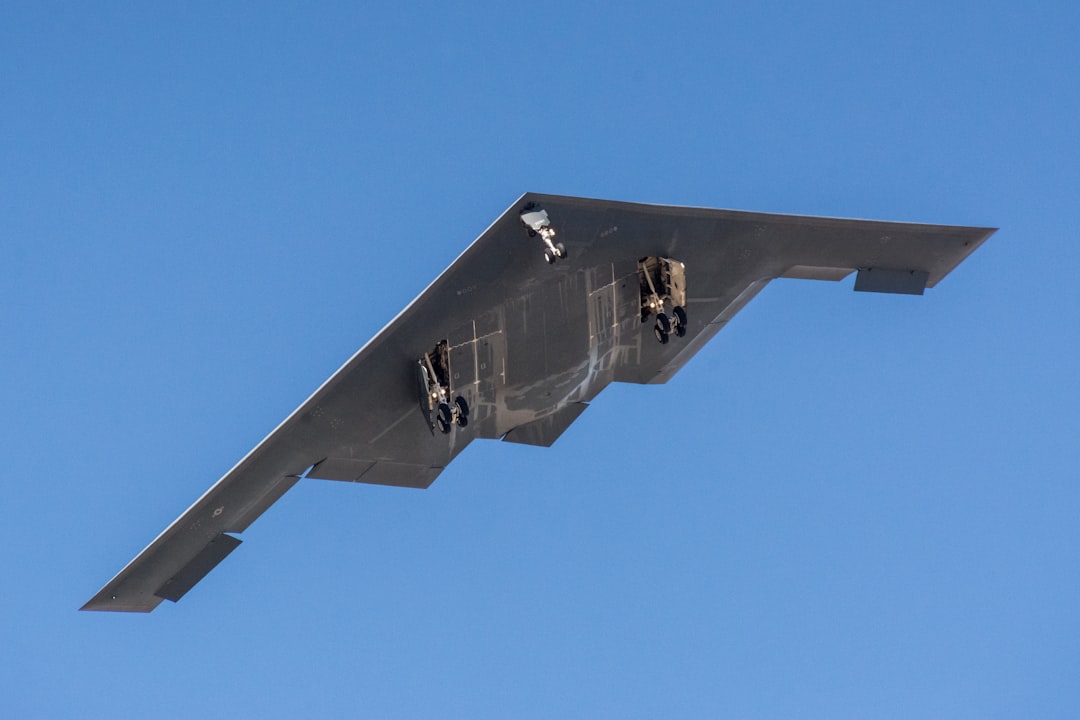
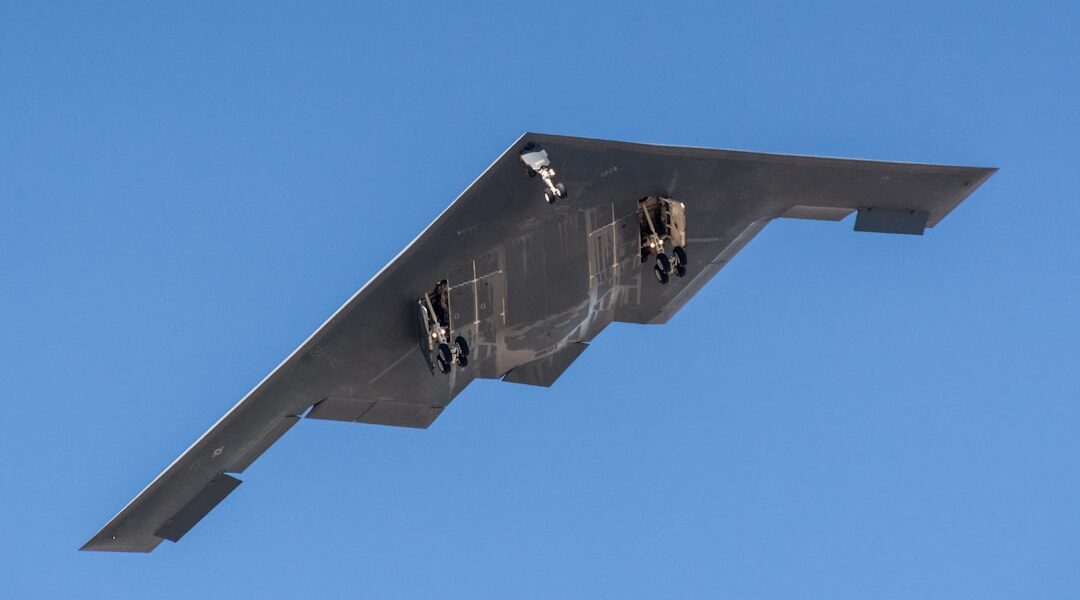
B-2 Spirit stealth bomber flying wing profile viewed from below showing the aircraft distinctive shape and minimal windows

For commercial pilots considering the transition to military aircraft, the limited visibility discussion sounds alarming until you’ve logged real time in actual IMC. You’re already flying on instruments. You already trust the gauges over your eyes when it matters. The B-2 cockpit extends that principle further — more capable sensors, fewer windows, no psychological option to just lean forward and look out when you’re uncertain what the displays are showing. It’s the same discipline, applied at a much higher stakes level.

Cramped canvas crew rest cot in military aircraft fuselage showing the limited space B-2 Spirit pilots sleep in during 40-hour missions

Behind the Seats: The Crew Rest Area Nobody Talks About

You’ve been awake for 16 hours. Twenty-four more to go. Your mission commander has the aircraft. You unstrap, slide past the ejection seat, and fold down a canvas cot — roughly six feet long — directly behind the cockpit seats. There’s a chemical toilet. A microwave. Styrofoam coolers with whatever food you packed before departure. This is the B-2 crew rest area.

There is no privacy. The total pressurized compartment is 25 square feet — that includes where the cot folds out. When one pilot is resting, the other is four feet away operating the aircraft. You can hear everything. Depending on your position, you can see most things. The chemical toilet has no meaningful enclosure. This is not a bunk on a naval vessel or a crew rest module on a wide-body airliner. It is a cot in the back of a 25-square-foot compartment that you share with one other person for 40 hours.

B-2 pilot Lt. Col. Tim Sutton put it plainly: the B-2 crew area is nothing like the C-17 in terms of comfort. The C-17 has a separate crew bunk area in the forward fuselage with real physical separation from the flight deck. The B-2 has one compartment that serves as cockpit, crew rest, galley, and lavatory simultaneously. You rest in the same space where you fly. That distinction becomes very tangible somewhere around hour 18, after you’ve crossed two time zones and you’re trying to sleep four feet from someone running checklist items on the nav system.

Rest rotations run two to three hours — long enough to get through one sleep cycle if conditions cooperate. Over a 40-hour mission, each crew member cycles through three or four rest periods. Fatigue management is a formal component of mission planning, not an afterthought. The aircraft commander and mission commander track each other’s fatigue state and explicitly hand off control at scheduled intervals, regardless of whether they feel tired. Waiting until you’re exhausted before resting is how you end up making a navigation error at hour 32.

Food is pre-planned and personally packed. The microwave handles hot meals. Styrofoam coolers manage perishables. Hydration gets deliberate attention because more water means more toilet trips, which interrupts rest periods and adds nuisance to an already spartan environment. None of this is cute or quirky. A crew that’s underfed, dehydrated, or poorly rested at the 35-hour mark is operationally degraded. The logistics of eating, sleeping, and managing your physiology over 40 hours is a real part of what B-2 crews train for.

What It Takes to Fly 40 Hours Without Landing

The B-2’s longest confirmed missions exceeded 40 hours. The 2003 Operation Iraqi Freedom strikes flew from Whiteman AFB in Missouri — 33 to 37 hours per mission, striking targets in Iraq and returning across two oceans without landing. The aircraft didn’t stop. The crew didn’t stop. The tankers found them multiple times along the way.

Aerial refueling is where the B-2’s visibility constraints create their most demanding operational challenge. Joining on a KC-135 or KC-10 tanker at night, in weather, with limited lateral visibility, requires flying precise formation using instruments and the refueling system cues. The contact envelope behind the tanker boom is small. Formation flying in weather is fatiguing under normal circumstances. Doing it at hour 14 of a mission, after a short rest rotation, with a penetration track to execute on the other side of the refueling — that’s a different level of demand entirely.

Mission-critical phases drive the rest rotation schedule. Takeoff, refueling, target ingress, weapons employment, egress from the threat environment, and recovery — both crew members need to be sharp for all of them. Mission planning explicitly identifies these phases and schedules rest rotations around them. You don’t put one person on the cot an hour before an aerial refueling. The schedule is built backward from the mission profile, ensuring that no high-demand phase finds a crew member coming off a rest period and still cognitively ramping back up.

Circadian rhythm breaks down around hour 20. The body’s reference for time-of-day becomes meaningless — you’ve crossed enough time zones and been awake long enough that the normal hunger, fatigue, and alertness cycles no longer track with the clock. B-2 crews eat on schedule, not when hungry. They rest on schedule, not when tired. The discipline of treating your physiology as a system to be managed — rather than a set of sensations to react to — is a real part of B-2 crew performance.

The aircraft itself supports this through pressurization, oxygen system design, and environmental controls calibrated for sustained crew performance rather than just comfort. The seat ergonomics and instrument placement reflect genuine human factors engineering for long-duration missions. None of it makes 40 hours easy. It makes 40 hours survivable, repeatedly, with a crew of two.

There’s a moment experienced B-2 pilots describe that doesn’t map cleanly to any other flying experience: hour 28, pre-strike, an ocean from home, mission still to execute. Everything before this was logistics — transit, refueling, systems checks. The actual job starts now. The cognitive load of weapons employment, threat response, and coordination with other strike elements — concentrated into a narrow window — requires precisely the mental sharpness the entire preceding rest rotation was engineered to preserve. Getting the rest schedule right isn’t a crew comfort issue. It’s a targeting accuracy issue.

509th Bomb Wing crew selection reflects this reality directly. The Air Force filters for pilots who can perform at the 30-hour mark with the same procedural precision they showed at hour two. The platform’s advantages only materialize with the human execution to match. A fatigued, poorly coordinated B-2 crew is operationally less capable than a fresh B-52 crew with three times the people. The aircraft is only as good as the two people flying it.

B-2 vs B-52 vs B-1 Cockpits: What Changed Across Generations

The B-2 is the end point of a 40-year trend in strategic bomber design: fewer crew members, more automation, higher workload per remaining seat. The comparison across the current USAF bomber fleet shows how far that trend ran.

Aircraft Crew Display Type In Service Mission Endurance Record
B-52H Stratofortress 5 (originally 6) Hybrid analog/digital (upgrading to B-52J) 1955 23+ hours (combat, extended with refueling)
B-1B Lancer 4 Glass cockpit with terrain-following radar 1986 30+ hours (with refueling)
B-2A Spirit 2 Full color glass cockpit, CMP upgraded 1997 40+ hours (confirmed OIF 2003)
B-52H Stratofortress strategic bomber flying overhead showing the eight-engine configuration that contrasts with the B-2 two-crew design

The B-52 entered service in 1955 with a six-person crew: pilot, co-pilot, radar navigator, navigator, electronic warfare officer, and gunner. The gunner was eventually cut and the crew reduced to five. The cockpit stayed largely analog through most of its service life — a remarkable testament to how long a well-designed aircraft can remain relevant with incremental upgrades. The B-52J program, ongoing now, will cut the crew to four through avionics modernization and finally add the full-color glass cockpit that the B-2 had from the beginning. The oldest bomber in the inventory is getting the cockpit it probably should have had 25 years ago.

The B-1B flies with four: pilot, co-pilot, offensive systems officer, and defensive systems officer. The design philosophy differs from the B-2 fundamentally — the B-1 was built for terrain-following penetration at low altitude and high speed, where radar-hugging flight profiles provide the survivability that stealth provides the B-2. That requirement shaped the cockpit and crew duties differently. The B-1B’s ejection system history is worth noting: the original design included a full crew capsule that separated the cockpit section from the aircraft. That system was removed during production in favor of individual seats, primarily to reduce weight and mechanical complexity.

The B-2’s two-crew design is the most aggressive automation bet in strategic bomber history. Electronic warfare, navigation, targeting — roles that required dedicated human specialists in the B-52 — are handled by onboard systems and shared between two seats. That’s only possible because the avionics architecture is capable enough to automate what used to need dedicated operators. The tradeoff is that when systems degrade, the remaining crew has to absorb workload that multiple specialists used to carry. The B-2 demands more from each person in it. It just demands fewer of them.

B-2 vs B-21 Raider: What the Next Generation Changed in the Cockpit

The B-21 Raider is operational. What’s publicly confirmed about its cockpit is limited. What can be reasonably inferred from available imagery and official statements tells a coherent story about where bomber cockpit design headed after the B-2.

The most obvious change is the windows. The B-2’s wraparound windscreen gives way to narrow horizontal slit windows on the B-21 — a further reduction in aperture that the War Zone documented in direct comparison imagery after B-21 flight testing began at Edwards AFB. From a radar cross-section standpoint this is straightforward: smaller window area means less radar-reflective surface to treat. The tradeoff is a more constrained natural visual field, which the B-2 already had by design.

B-21 Raider stealth bomber flying wing concept showing the narrower cockpit window design compared to the B-2 Spirit

How the B-21 compensates for that visual restriction isn’t officially confirmed. The technology pointing toward the answer is the same approach the F-35 uses: a Distributed Aperture System where cameras embedded across the airframe feed sensor-fused imagery to the crew, effectively giving pilots the ability to see through the aircraft’s skin in any direction. Whether the B-21 uses this approach — potentially with helmet-mounted display integration — remains unconfirmed in open sources. What’s clear is that Northrop Grumman has the capability, the F-35 program proved it works in combat aircraft, and the B-21 is exactly the program where it would be applied.

The B-21’s open mission systems architecture is a confirmed and significant departure from the B-2. The B-2 runs on a closed, classified architecture where any subsystem upgrade requires navigating a tightly controlled modification process — which is why B-2 avionics upgrades take years and cost what they cost. The B-21 was designed from the start for open architecture: faster software integration, cheaper capability upgrades, less disruption when new threats require new responses. In practical terms, the B-21 cockpit can be updated in ways the B-2 cockpit couldn’t — without multi-year modification programs and the budget cycles that accompany them.

Crew complement on the B-21 is believed to be two, matching the B-2. The logic for two-crew rather than single-pilot hasn’t changed: extended missions require rest rotation, nuclear weapons employment requires multiple authorizations, and current automation isn’t certified to monitor a nuclear-capable platform without human oversight for multi-hour periods. Single-pilot strategic bombers aren’t a near-term reality for nuclear-capable aircraft. Two-crew remains the floor.

Can You Visit a B-2 Cockpit? Where to See One Up Close

One B-2 Spirit is on public static display: Spirit of Ohio, at the National Museum of the United States Air Force at Wright-Patterson Air Force Base in Dayton. It sits in the research and development gallery alongside other aircraft that required specific declassification decisions about what could be shown publicly. That context alone tells you something about the program.

The cockpit is not accessible. The aircraft is roped off for exterior viewing from walkways. You can see the full airframe — the blended wing-body shape, the inlet geometry, the surface treatment on the leading edges, the overall scale. You will not see the interior, the displays, the ejection seats, or the crew rest area. Those remain restricted.

Whiteman Air Force Base in Knob Noster, Missouri is the only operational B-2 installation. Whiteman has historically run open house events — Thunder Over the Heartland — where B-2 static displays and flyovers are part of the program. Ground-level viewing gets you closer than the museum allows. Cockpit access at these events isn’t typical. The base’s public affairs office is the correct source for current event scheduling, which varies based on operational tempo and command decisions.

The Udvar-Hazy Center at the Smithsonian in Chantilly, Virginia has strong military aviation holdings but no B-2 on display. Dayton remains the only confirmed public viewing location. Aviation enthusiasts who want context beyond the exterior should look at the AeroDefense exhibits at the Air Force Museum — they provide more system and mission detail than the aircraft itself reveals from the ground.

B-2 flyovers appear at Nellis AFB Airpower Nation events, the Dayton Air Show, and selected major events at other bases when the mission schedule allows. Flyovers happen at distance and altitude — the B-2 doesn’t do low passes at shows the way an F-16 or Thunderbird does — but the flying wing planform is unmistakable even at a few thousand feet AGL. For aviation photographers, a B-2 airshow appearance is worth planning around. Cockpit-level static access isn’t currently available anywhere to the public.

The Bottom Line on the B-2 Cockpit

The B-2 Spirit cockpit is not impressive by the usual metrics. It’s 25 square feet. Two seats. Eight displays. A canvas cot. The toilet has no real enclosure. The windows give you less natural visibility than a light GA aircraft. The control interface is a trackball and bezel buttons that belong to a different design era than the touchscreen panels in current commercial cockpits.

What it actually is: the most operationally capable two-crew combat workspace ever built. The navigation stack can derive a precision position with no external signal. The SAR renders the ground in high resolution through weather at any hour. The display architecture carries more operationally relevant information per square foot of panel space than anything flying when the aircraft entered service — and the CMP upgrades kept that capability current into the 2020s. The crew can fly 40 hours, rest in rotation, refuel multiple times, and strike targets on two continents, then bring the aircraft home — two people, planned, briefed, flown, and recovered without a ground controller talking them through it.

The B-21 will succeed it. Narrower windows, open architecture, faster upgrade cycles — the next generation extends the philosophy that the B-2 established. But the B-2 cockpit is where the template was built: total sensor reliance over window views, full glass displays from the first production aircraft, navigation resilience against jamming, and human factors engineering for missions measured in days not hours. Every next-generation stealth bomber cockpit is built on the decisions made in Palmdale in the late 1980s when the B-2 team figured out how two people could do the work of six.

aviateai

aviateai

Author & Expert

aviateai is a passionate content expert and reviewer. With years of experience testing and reviewing products, aviateai provides honest, detailed reviews to help readers make informed decisions.

2 Articles
View All Posts

Stay in the loop

Get the latest aviate ai updates delivered to your inbox.